Species-dependent antifungal profiles reveal stronger yeast inhibition by chitosan than by a sulfate-containing polysaccharide-rich extract from Jania adhaerens

Species-dependent antifungal profiles reveal stronger yeast inhibition by chitosan than by a sulfate-containing polysaccharide-rich extract from Jania adhaerens
Valverde-Urrea, M.; Defez-Perez, J.; Colom-Valiente, M. F.; Terradas-Fernandez, M.; Lopez-Llorca, L. V.
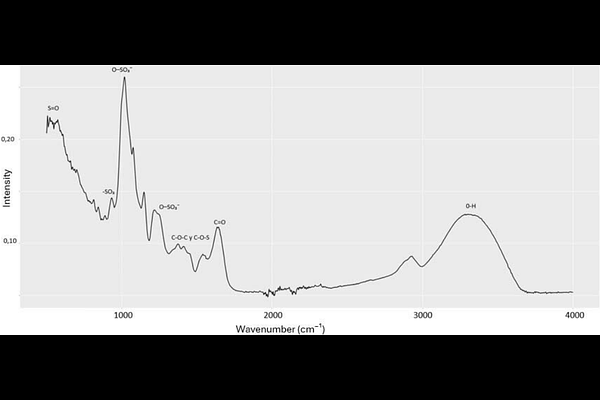
AbstractYeast infections are becoming an increasing public health concern, mainly due to the spread of opportunistic species and the emergence of strains resistant to commonly used antifungal drugs. Marine resources are a promising source of bioactive compounds, including polysaccharides and other biopolymers with potential antifungal applications. In this study, a sulfate-containing polysaccharide-rich extract was obtained from the red alga Jania adhaerens and chemically characterized. Its antifungal activity was compared with that of a commercial chitosan formulation against clinically relevant yeasts, including species of Candida, Cryptococcus, Clavispora, Naganishia and Trichosporon. Growth kinetics were monitored in liquid medium over 24 h, and antifungal activity was evaluated through growth rate analysis, growth inhibition at 20 h and susceptibility clustering. The polysaccharide extract showed moderate but consistent growth inhibition, with the strongest effects observed at 5 mg/mL. Maximum growth inhibition reached 60.9% in Cryptococcus deuterogattii and 59.8% in Candida albicans, although no complete inhibition was observed within the tested concentration range. In contrast, chitosan showed a stronger antifungal effect, with minimal inhibitory concentration (MIC) values between 10 and 20 g/mL in several species and maximum inhibition values above 80% in the most susceptible yeasts. However, C. albicans showed marked resistance to chitosan, with inhibition below 12%. K-means clustering confirmed distinct susceptibility profiles between treatments, supporting a species-dependent response. Overall, these results highlight marine-derived biopolymers as promising antifungal candidates and show that chitosan and algal sulphated polysaccharides produce distinct, species-dependent antifungal profiles.