Expression of amyloid-β antibody via AAV of CNS tropism alleviates Alzheimer's disease in mice

Expression of amyloid-β antibody via AAV of CNS tropism alleviates Alzheimer's disease in mice
Dai, Z.-M.; Min Jiang, M.; Yin, W.; Wang, Z.; Zhu, X.-J.; Qiu, M.
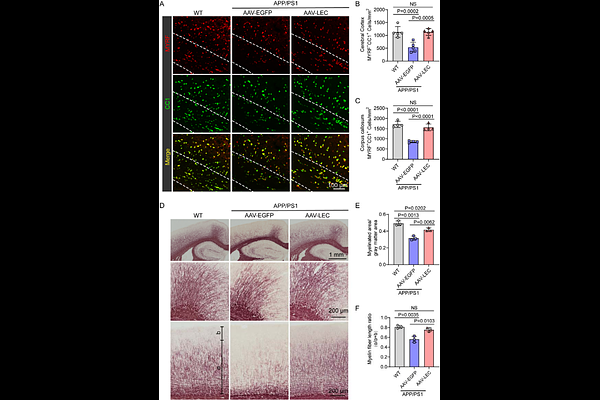
AbstractAlzheimer's disease (AD), the leading cause of dementia, affects over 33 million people worldwide, with pathogenesis tied to amyloid-{beta} (A{beta}) accumulation. Although anti-A{beta} monoclonal antibodies have shown clinical benefits, they often cause side effects including amyloid-related imaging abnormalities and brain microhemorrhage, especially in APOE E4 allele carriers. Here we used PHP.eB serotype adeno-associated virus (AAV), a vector with enhanced central nervous system (CNS) tropism, to deliver an A{beta} antibody expression vector (AAV-LEC) into the CNS of APP/PS1 and 5xFAD mice intravenously. The AAV-LEC-mediated expression of anti-A{beta} antibodies in the CNS significantly reduced the number and size of A{beta} plaques at various stages in both APP/PS1 and 5xFAD mice, alongside improved spatial learning and memory. It also reversed abnormal glial activation with reduced disease-associated microglia and astrocytes, and restored oligodendrocyte differentiation and myelin formation. No brain microhemorrhage or liver damage was detected following the AAV-antibody treatment. Thus, this AAV-mediated strategy offers a promising, convenient and safe AD therapeutic approach in the future.