ER-stress signaling and Alzheimer's proteins adjust the quality of human protein synthesis

ER-stress signaling and Alzheimer's proteins adjust the quality of human protein synthesis
Cao, Z.; Hartmann, M.; Wagner, M.; Schug, A.; Roesler, R.; Wiese, S.; Yang, Q.; Oswald, F.; Scharffetter-Kochanek, K.; Iben, S.
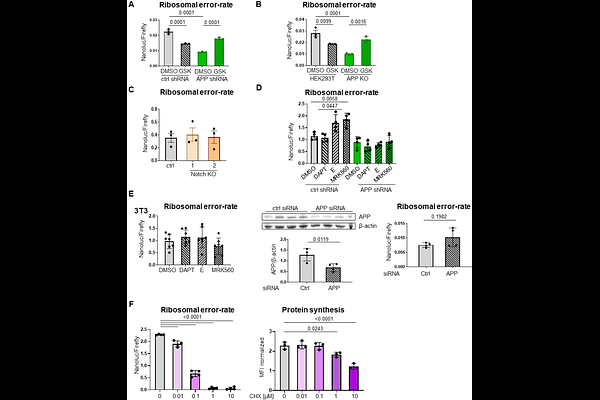
AbstractProteostasis is the balance of protein synthesis, protein maintenance and protein degradation. Proteostasis is disturbed in neurodegenerative disorders like Alzheimer`s disease (AD) of the aging human body. Protein synthesis by the ribosome is the most error-prone process of gene expression. If and how the error-rate of protein synthesis is regulated during human aging and contributes to AD is unknown. Here we show that ribosomal error-rate is adapted in cellular models of human aging, but not mouse aging. This adaptation involves ER-stress signaling and the Alzheimer`s disease-related proteins amyloid-beta precursor protein and presenilin 1. Our results suggest that ribosomal error-rate is a relevant parameter in human aging and disease.