Metabolic stress reveals widespread accumulation of cap-unmethylated RNAs

Metabolic stress reveals widespread accumulation of cap-unmethylated RNAs
Xing, Z.; Freitas, A. V.; Sutter, B. M.; Dang, N. K.; Ingolia, N. T.; Tu, B. P.
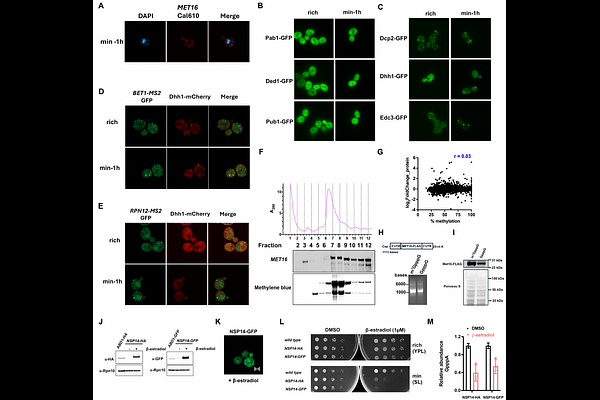
AbstractRNA polymerase II transcripts are capped with N7-methylguanosine (mG), a conserved modification essential for mRNA function. Although traditionally viewed as constitutive, we developed a mass spectrometry-based method to demonstrate that in both yeast and mammalian cells, a substantial population of mRNAs lack cap methylation in response to SAM-limiting conditions and oxidative stress, which may be frequently encountered across organisms. Through developing two transcriptome-wide approaches, we found that methylation is enriched on specific transcripts and uncovered an unexpected connection between histone H3K36me3 and cap methylation, with both marks preferentially associated with stress-responsive MAPK signaling pathways. Strikingly, cap-unmethylated mRNAs exhibit features of canonical mRNAs-they are polyadenylated, exported to the cytosol, and translated. Enforced cap methylation reduces cell growth under SAM limitation, suggesting that unmethylated mRNAs confer an adaptive advantage during stress. These findings establish mRNA cap methylation as a dynamic, regulated modification and a previously underappreciated layer of gene expression control.