VASP Promotes Aortic Valve Calcification by Interacting with FBLIM1 to Activate the Focal Adhesion Pathway

VASP Promotes Aortic Valve Calcification by Interacting with FBLIM1 to Activate the Focal Adhesion Pathway
Liu, X.; Xu, Q.; Xing, K.; Zhang, N.; Zheng, Q.; Sun, P.; Li, R.; Zhang, W.; Li, Z.; Wang, Z.
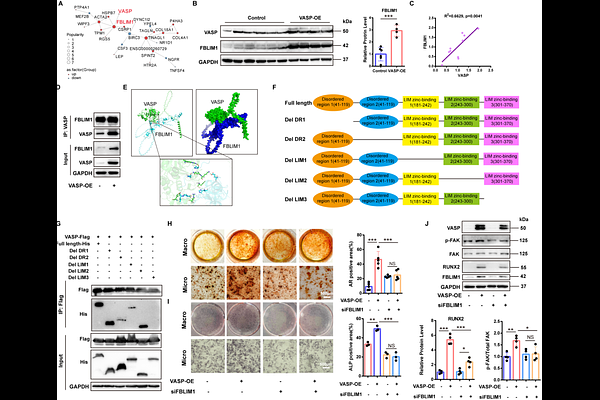
AbstractObjective: Calcific aortic valve disease (CAVD) is the most prevalent valvular heart disease, yet there is no effective pharmacological therapy to halt or reverse its progression. Focal adhesions (FAs) are dynamic structures that connect cells to the extracellular matrix (ECM), serving not only as mechanical anchors but also as critical signalling hubs that regulate cell adhesion, spreading, migration, differentiation, and mechanotransduction. However, their specific role in CAVD pathogenesis remains largely unknown. Approach and Results: To identify upregulated hub genes, an integrated analysis of proteomics and RNA sequencing was performed on calcified aortic valves. To investigate functional roles in vitro, we utilized genetic knockdown and overexpression of VASP in valvular interstitial cells (VICs), followed by phenotypic evaluations of osteogenic differentiation, calcification, and elastin (ELN) secretion. Downstream mechanisms were explored using RNA-seq in VASP-overexpressing VICs, alongside pharmacological inhibition of the FA pathway. Finally, protein-protein interaction assays were conducted to map and analyze the physical binding between VASP and the structural domains of FBLIM1. Integrated omics analysis identified VASP as a significantly upregulated gene in human calcified aortic valve tissues. Functionally, VASP knockdown inhibited, whereas its overexpression promoted, the osteogenic differentiation of VICs. RNA-seq revealed that VASP overexpression activated the FA pathway, and the pharmacological blockade of this pathway successfully suppressed calcification both in vitro and vivo. Mechanistically, we demonstrated a direct physical interaction between VASP and the third LIM zinc-binding domain of FBLIM1, and knockdown of FBLIM1 effectively reversed the pro-calcific effects of VASP. Finally, VASP overexpression was found to promote the secretion of ELN, which subsequently contributed to the calcification process. Conclusion: Our study reveals that the interaction between VASP and FBLIM1 drives CAVD progression by activating the FA pathway, which subsequently leads to excessive ELN secretion. These findings reveal a novel mechanistic pathway and may provide a potential therapeutic target for CAVD intervention.