Telomere-to-telomere gap-free genome assembly integrated with multi-omics uncovers shading mediated regulation of leaf aroma biosynthesis in aromatic crop Pandanus amaryllifolius

Telomere-to-telomere gap-free genome assembly integrated with multi-omics uncovers shading mediated regulation of leaf aroma biosynthesis in aromatic crop Pandanus amaryllifolius
Xu, Z.; Zhang, X.; Li, Y.; Zhao, S.; Li, Q.; Zhou, J.; Ouyang, H.; Hu, X.
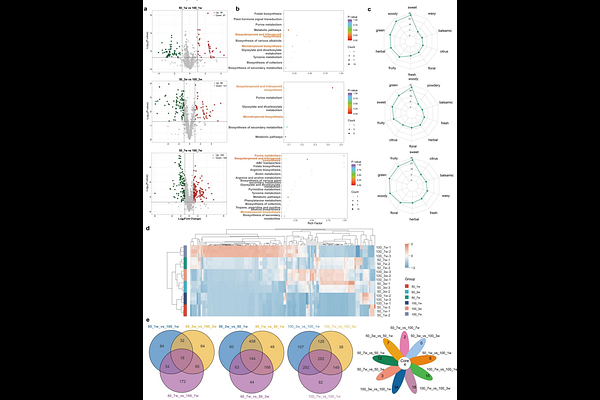
AbstractPandanus amaryllifolius is a valuable aromatic crop widely cultivated in tropical forest understories. Here, A telomere-to-telomere, gap-free genome assembly of the Chinese cultivar Taishan Banlan was generated, and the molecular basis underlying shading-mediated regulation of leaf aroma biosynthesis was elucidated for the first time through integrated genomic, transcriptomic, and metabolomic analyses. Volatile metabolomics identified 1599 volatile organic compounds in leaf tissue, with terpenoids as the primary contributors to leaf aroma. Shading modulated the aroma quality of P. amaryllifolius primarily via terpenoid biosynthesis, yielding aroma profiles dominated by sweet, fruity, green, and woody notes. Integrated transcriptomic profiling revealed that terpenoid biosynthesis is co-regulated by structural genes in the MVA/MEP pathways, TPS family members, and key transcription factors, which collectively modulate the biosynthesis and accumulation of the three core differential terpenoids. Our findings provide valuable resources for the targeted genetic improvement and efficient cultivation optimization of P. amaryllifolius.