Binding Structures, Mechanical Properties, and Effects on Cellular Behaviors of Extracellular Matrix Proteins on Biomembranes

Binding Structures, Mechanical Properties, and Effects on Cellular Behaviors of Extracellular Matrix Proteins on Biomembranes
Ivanovskaya, V.; Ruffing, J.; Phan, M. D.
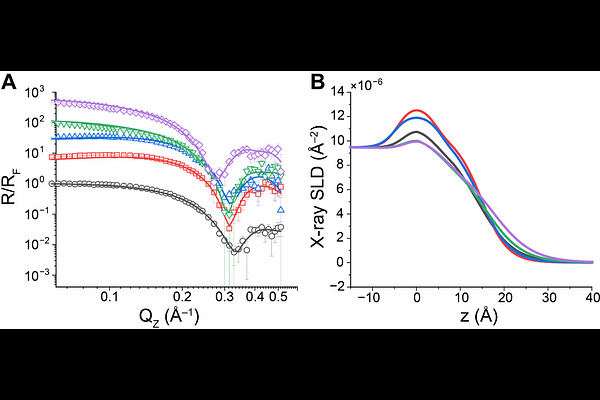
AbstractExtracellular matrix (ECM) proteins assemble to form a heterogeneous connective scaffold that supports cells. Physical interactions between cells and the matrix regulate cellular behaviors and influence subsequent tissue construction. However, there is a lack of fundamental understanding regarding the contributions of individual native ECM proteins to the matrix. This gap arises from the need for nanoscopic characterization, which operates on a much smaller length scale than typical assessments in cell and tissue cultures, as well as in tissue reconstruction and clinical implantation. This study aims to systematically investigate how individual ECM proteins affect lipid membranes structurally and mechanically, and how these influences regulate cell migration. Results from Langmuir isotherm analysis, X-ray reflectivity measurements, and cell scratch assays demonstrate that strong collagen adsorption on the membrane surface disrupts lipid packing. However, its rigid network provides a sturdy scaffold for cell adhesion, thereby enhancing cell attachment and promoting cell migration. In contrast, elastin has a minimal structural or mechanical impact on the membrane during both adsorption and compression, but it benefits cells by facilitating migration and reducing the risk of infection. Fibronectin, on the other hand, exhibits complex mechanical responses to compression, characterized by significant structural rearrangements that occur during adsorption. This strong interaction with the membrane can result in excessively high adhesion forces, ultimately limiting cell motility. These findings lay the foundation for the design of artificial scaffolds that can manipulate cellular responses, a critical step toward advancing regenerative medicine and tissue engineering.