Topological Control of Quantum Chaos Diagnostics: OTOCs, Spectral Statistics, and Information Scrambling in Ising Model

Topological Control of Quantum Chaos Diagnostics: OTOCs, Spectral Statistics, and Information Scrambling in Ising Model
Reza Pirmoradian, Soheir Rouhani, M. Reza Tanhayi
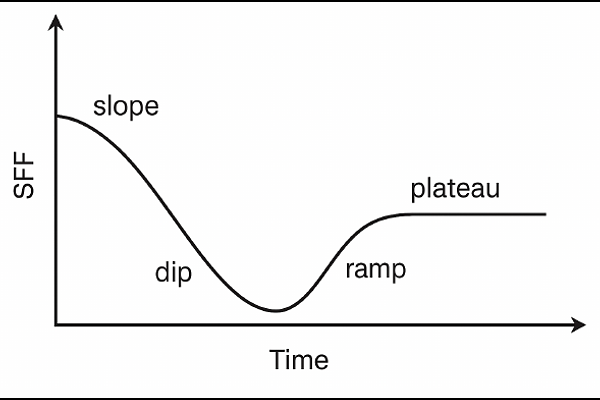
AbstractWe investigate the integrability-to-chaos transition and information scrambling in Ising spin networks via a graph-theoretic formulation. Modeling spins as vertices and interactions via adjacency matrices across path, Erdős--Rényi, and Watts--Strogatz topologies, we demonstrate that long-range couplings and heterogeneous degree distributions drastically accelerate quantum information propagation. The Hamiltonian comprises local and normalized non-local interactions; tuning the non-local coupling and field heterogeneity drives integrability breaking. To quantify scrambling, we employ bipartite mutual and tripartite information. Increasing non-local interactions drives tripartite information to large negative values, signaling deep information scrambling. Out-of-time-order correlators (OTOCs) exhibit exponential early-time growth, yielding quantum Lyapunov exponents that scale systematically with parameters governing the chaotic regime. Complementing this, Krylov complexity reveals rapid operator growth in the chaotic phase, synchronizing with OTOC and mutual information dynamics. Spectrally, the transition manifests as a shift from Poissonian to Wigner--Dyson level spacing statistics. The spectral form factor (SFF) exhibits the characteristic slope-dip-ramp-plateau structure, enabling the extraction of Thouless and Heisenberg times. Crucially, a reduced Thouless time strongly correlates with accelerated informational and operator scrambling. Ultimately, this work establishes a unified framework bridging network topology with information-theoretic, operator, and spectral diagnostics, offering profound insights into thermalization and non-equilibrium dynamics in quantum many-body systems.