Hypoglycemia Aggravated Cognitive Degeneration by activating Endothelial ZBP1-mediated PANoptosis in Type 2 Diabetes

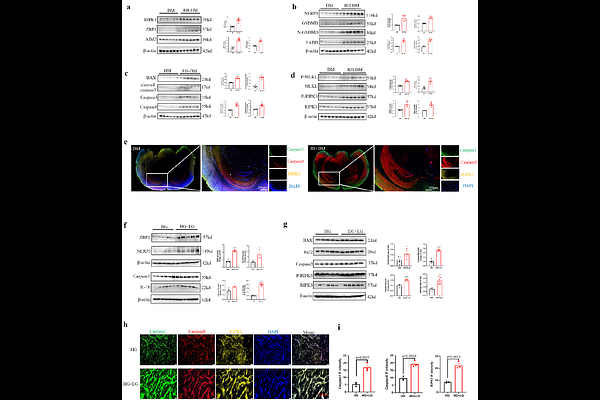
Hypoglycemia Aggravated Cognitive Degeneration by activating Endothelial ZBP1-mediated PANoptosis in Type 2 Diabetes
Luo, W.; Xiao, Q.; Li, N.
AbstractRecurrent hypoglycemia increases cognitive impairment in diabetes mellitus patients. Following cerebral neuron injury, endothelial cells provide morphological, metabolic and immune support to damaged neurons. We investigated the inflammatory mechanism involved in hippocampal neuron degeneration. Behavioral experiments, including the open field test (OFT) and the Morris water maze test, were performed to measure cognitive changes. Using a vascular ring experiment, we evaluated vasodilation of the carotid artery. ZBP1 expression was knocked down after transfection with small interfering RNA in a brain endothelial cell line (bEnd3). In this study, PANoptosis, a recently defined form of programmed cell death (PCD), was found to be increased by hypoglycemia in the hippocampus of type 2 diabetic mice in vivo and by low glucose in bEnd3 cells in vitro. ZBP1 knockdown decreased PANoptosis induced by low-glucose stimulation in high-glucose-cultivated bEnd3 cells. RNA transcriptomics sequencing revealed that AGE-RAGE signaling significantly changed after ZBP1 was knocked down in bEnd3 cells. Corresponding biochemical data confirmed that ZBP1 knockdown regulated the advanced glycation end products (AGEs)-Receptor for Advanced Glycation End Products (RAGE) axis in bEnd3 cells. We present the first evidence that hypoglycemia impaired cognition in mice with type 2 diabetes by activating brain endothelial ZBP1-mediated PANoptosis via the AGE-RAGE axis.