Generation of lachrymatory factor synthase-suppressed onion (Allium cepa L.) by Agrobacterium-mediated gene transfer for CRISPR/Cas9 genome editing

Generation of lachrymatory factor synthase-suppressed onion (Allium cepa L.) by Agrobacterium-mediated gene transfer for CRISPR/Cas9 genome editing
Tamaru, S.; Imai, S.; Watanabe, S.; Ikegai, T.; Kondo, S.; Igawa, T.; Kamoi, T.
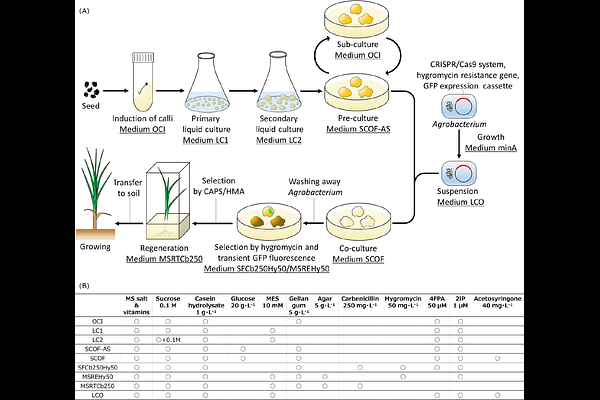
AbstractLachrymatory factor, an irritating volatile with tear-inducing property, is produced when onion bulbs are cut or chopped. We aimed to generate onion plants with reduced lachrymatory factor synthase (LFS) activity via clustered regularly interspaced short palindromic repeats (CRISPR)/CRISPR associated protein 9 (CRISPR/Cas9) genome editing. Calli induced from primary roots were transformed with Agrobacterium tumefaciens carrying expression cassettes for CRISPR/Cas9, guide RNA, green fluorescent protein (GFP), and hygromycin resistance; callus lines that showed a high-frequency stable GFP expression were selected as "elite callus lines" that were suitable for transformation. Cleaved amplified polymorphic sequence (CAPS), heteroduplex mobility assay (HMA), and Sanger sequencing confirmed mutations introduced into the LFS gene, and plants were regenerated from the confirmed LFS-edited callus lines. The LFS enzyme activity in the leaves and bulbs of the LFS-edited plants was lower than that in control plants, while the LFS-edited plants exhibited severe growth abnormalities and failed to set seed, possibly due to long-term culture to maintain the elite callus line. The present study first demonstrated that onion genome editing, which modified a specific trait of onion, the reduction of LFS activity, was achieved. The results obtained opened the feasible way toward the final goal: the production of tear-free, higher health-functional onions.