Estrogen Impacts Nod2-Dependent Regulation of Intestinal Homeostasis

Estrogen Impacts Nod2-Dependent Regulation of Intestinal Homeostasis
Eklund, M.; Foley, E.
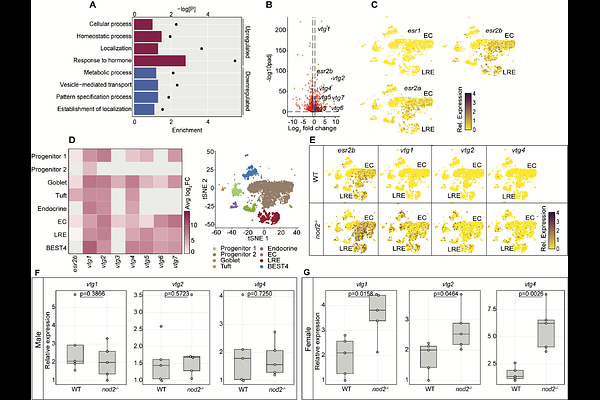
AbstractMutations in the innate immune receptor NOD2 are the greatest single genetic risk factors for Crohns disease, yet the mechanisms by which NOD2 regulates intestinal homeostasis remain unclear. Here, we used a CRISPR-generated zebrafish model to determine the impacts of NOD2 deficiency on intestinal health. In a series of cellular, molecular, and transcriptomic studies, we uncovered substantial effects of NOD2 deficiency on epithelial and immune compartments, including deregulated expression of developmental pathways critical for establishment and maintenance of the gut epithelium, and an unexpected increase in the expression of multiple estrogen-response genes. In a series of functional assays, we uncovered a mechanistic link between estrogenic signals and NOD2-deficiency phenotypes, whereby exposure to estrogen alone replicated NOD2-deficiency phenotypes, and exposure to an estrogen receptor antagonist reverted the epithelial defects observed in NOD2 mutants. Our findings identify a critical NOD2-estrogen regulatory axis in the establishment of intestinal homeostasis and suggest that hormonal signaling may contribute to the sex-specific pathogenesis of Crohns disease.