Transition metal-triggered immunity via an Arabidopsis NLR pair

Transition metal-triggered immunity via an Arabidopsis NLR pair
Gao, C.; Chen, S.; Chen, J.; Tang, Z.; Huang, X.-Y.; Wang, P.; Dong, S.; Dangl, J. L.; Wan, L. L.; Zhao, F.-J.
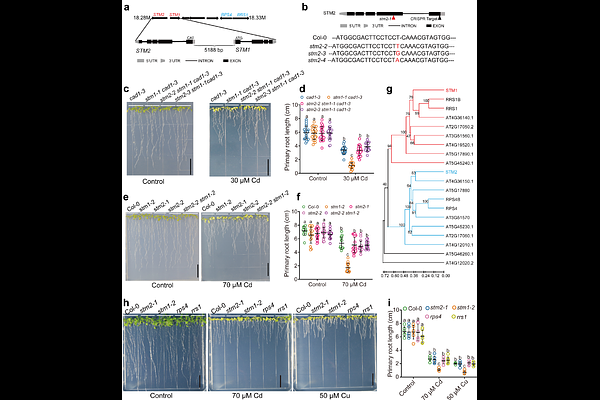
AbstractPlants are challenged by multiple biotic (e.g. pathogens) and abiotic (e.g. heavy metals) stressors. Some transition metals can enhance plant's defense against pathogens, but the mechanism remains unclear. Here, we demonstrate that an Arabidopsis head-to-head gene pair of intracellular nucleotide-binding leucine-rich repeat (NLR) receptors, both expressed in the endodermis of roots, antagonistically control transition metal-triggered immunity. One NLR, STM2 binds transition metal ions, such as Cd2+, Cu2+ and Zn2+, with its LRR domain to enhance its NAD+ hydrolytic activity and immune responses via the EDS1/PAD4/ADR1 module, triggering enhanced resistance to bacterial wilt Ralstonia solanacearum. The other NLR, STM1 suppresses STM2 to protect plants from transition metal-triggered immunity and growth inhibition in the presence of excess metals. STM1 also dampens resistance to the pathogen. Our study defines an NLR activated by transition metals and reveals a trade-off between susceptibility to pathogens and sensitivity to transition metals that are pervasive in soil.