Morula complementation restores fetal kidneys in xenocompatible SALL1 null sheep

Morula complementation restores fetal kidneys in xenocompatible SALL1 null sheep
Appleby, S. J.; Fermin, L. M.; Delaney, S.; Wei, J.; Meng, F.; Turner, P.; Wells, D. N.; Davidson, A. J.; Oback, B.
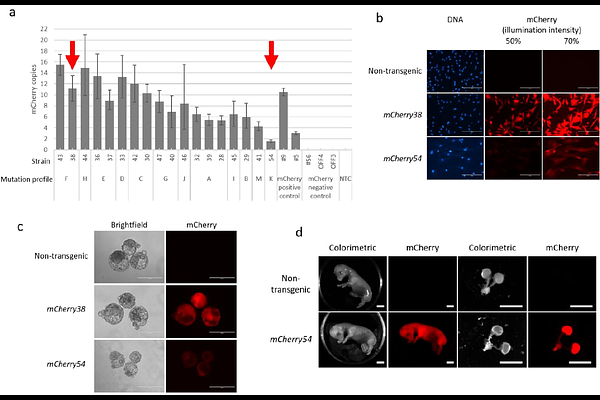
AbstractTo meet the global shortage of organs, extensive genome modifications have been performed to "humanize" livestock tissues for xenotransplantation. However, residual immune rejection remains a problem, prompting alternative approaches that explore the use of animals as hosts for growing human organs. This requires genome editing to disable organogenesis in the host and embryo complementation with suitable donor cells to fill the empty organ niche in chimaeric animals. Pigs have been the predominant livestock species investigated for this approach. Here, we used domestic sheep as hosts for donor-derived kidney formation. Spalt-Like Transcription Factor 1 (SALL1) was targeted in male fibroblasts lacking xenoantigens CMAH and GGTA1, using either one gRNA within zinc finger cluster (ZFC) 2 or two gRNAs to remove all ZF domains. Following somatic cell cloning and embryo transfer of triple knockout strains, fetuses were collected on gestational day 48 to analyze the SALL1 KO phenotypes. Single gRNA editing produced a hypomorph with different degrees of metanephric hypoplasia, while the dual-gRNA deletion resulted in a null allele which completely abolished nephrogenesis. Female donor cells carrying high vs low copy numbers of an mCherry transgene, as well as CMAH and GGTA1 edits, were used for morula complementation. Fetal kidney development was anatomically and histologically restored in sex-chimaeric hosts, providing proof-of-concept for using sheep as a new model species for in vivo organ generation.