Urban chemical stress disrupts cross-domain microbial networks in river sediments

Urban chemical stress disrupts cross-domain microbial networks in river sediments
Acosta, E.; Backhaus, T.; Brack, W.; Inostroza, P. A.
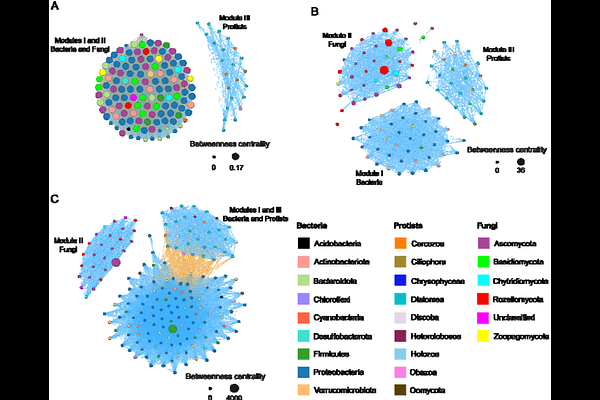
AbstractFreshwater sediments face increasing anthropogenic stress, yet their effects on cross-domain microbial interactions remain understudied. We analysed co-occurrence networks encompassing bacteria, protists, and fungi in sediments from two urban river systems in central Chile (Aconcagua and Maipo), using high throughput metabarcoding. Sites under multidimensional pollution stress exhibited fragmented networks, reduced cross-domain connectivity, and a predominance of positive correlations, consistent with stress-induced facilitation. Keystone taxa shifted, with Firmicutes, Ciliophora and Rozellomycota gaining prominence under stress. Conversely, reference sites displayed cohesive networks and balanced interaction types, driven by Proteobacteria, Ascomycota and Basidiomycota. Negative co-occurrences between protists and bacteria in contaminated zones suggest intensified competition or top-down trophic control. Our findings highlight the vulnerability of cross-domain microbial assemblages to urban pollution and identify specific metrics as candidate bioindicators for ecosystem integrity.