CaMKK2 Identifies Biologically Aggressive Chronic Lymphocytic Leukemia and Regulates Leukemic Survival and Nurse-Like Cell Support

CaMKK2 Identifies Biologically Aggressive Chronic Lymphocytic Leukemia and Regulates Leukemic Survival and Nurse-Like Cell Support
Jahuari, S.; Cooper-Volkheimer, A.; Verma, V.; Kaplan, D. G.; Basher, F.; Weinberg, B. J.; Chao, N.; Racioppi, L.
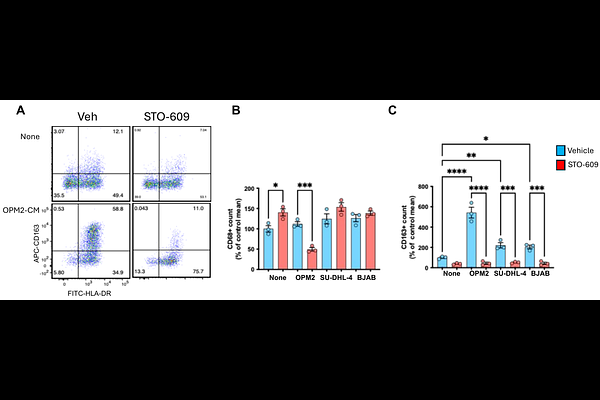
AbstractBackground/Objectives: Identification of prognostic biomarkers that capture biologically aggressive disease remains a major need in chronic lymphocytic leukemia (CLL). Aberrant calcium signaling contributes to leukemic survival; however, the clinical relevance of Calcium/calmodulin-dependent protein kinase kinase 2 (CaMKK2), a calcium-responsive kinase, has not been defined. This study evaluated CaMKK2 as a candidate prognostic biomarker and functional regulator in CLL. Methods: CaMKK2 expression was quantified in purified CD19 CLL cells from a clinically annotated cohort balanced by immunoglobulin heavy chain variable region (IGHV) mutation status. Associations with time-to-treatment and overall survival were analyzed. Functional relevance was assessed by pharmacologic inhibition of CaMKK2 in primary CLL cells using metabolic (MTS) and apoptosis (Annexin V/PI) assays. Correlations between CaMKK2 expression and inhibitor sensitivity were determined. The impact of CaMKK2 inhibition on nurse-like cell (NLC) differentiation and macrophage-mediated leukemic support was evaluated in ex vivo culture systems. Results: Elevated CaMKK2 expression was enriched in IGHV-unmutated CLL and associated with shorter time-to-treatment and inferior overall survival. CaMKK2 inhibition reduced primary CLL viability in a dose-dependent manner and induced apoptosis, with sensitivity correlating with CaMKK2 expression levels. Inhibition also attenuated CD163 macrophage polarization and impaired NLC-mediated support of leukemic cells. Conclusions: CaMKK2 expression identifies biologically aggressive CLL and functionally contributes to leukemic persistence. These findings position CaMKK2 as a prognostically relevant biomarker with therapeutic implications, supporting further evaluation of CaMKK2-targeted strategies in high-risk CLL.