Sustained epigenetic rejuvenation of serially engrafting human iPSC-derived HSCs

Sustained epigenetic rejuvenation of serially engrafting human iPSC-derived HSCs
Jain, A.; Li, J.; Yu, X.; Opejin, A.; Yu, D.; Trapp, A.; Tumiel, J.; Chiang, Z.; Pastrana, E.; Polanco, C.; Pachas, J.; Lopez, F.; Pulido, M.; Carapia, B.; Deshmukh, S.; Vavilina-Halstead, A.; Sevilla, A.; Dabbah, M.; Karthikeyan, S.; Shindyapina, A.
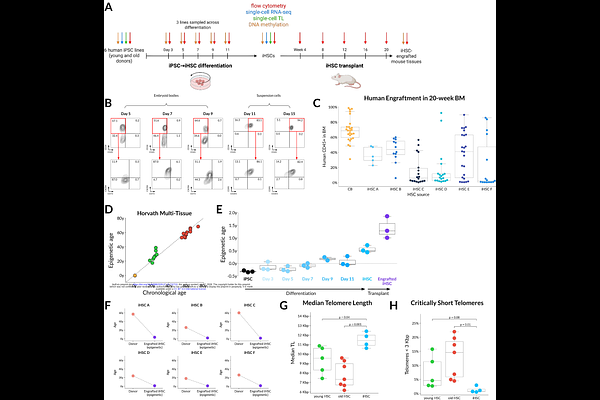
AbstractHematopoietic stem cell (HSC) function declines with age, contributing to immunosenescence and inferior transplantation outcomes. Here, we generated iPSC-derived HSCs (iHSCs) from multiple adult donors and performed integrated epigenetic, transcriptional, telomeric, and functional analyses to see if they retain youthful identity across differentiation and serial transplantation. Longitudinal DNA methylation profiling revealed that, independent of donor age, epigenetic age was reset to near zero in iPSCs and remained under seven years across differentiation and transplantation. In contrast, hematopoietic identity was established through a two-phase process: directional remodeling during in vitro differentiation extinguished pluripotency programs and initiated hematopoietic regulatory networks, while long-term engraftment was associated with a second wave of promoter methylation differences that converged toward primary adult HSCs. Notably, methylation at age-associated sites and global entropy remained stable across both phases, and single-cell telomere analysis demonstrated restoration of telomere length in iHSCs compared to primary adult HSCs. Youthful epigenetic features persisted in downstream neutrophil and platelet progeny and were maintained through secondary transplantation. These findings demonstrate that long-term HSC identity can be achieved independently of epigenetic aging and establish a framework for evaluating rejuvenated stem cell-derived grafts in regenerative medicine.