Generation of a novel Slc7a9G105R mutant mouse identifies new biomarkers for cystinuria

Generation of a novel Slc7a9G105R mutant mouse identifies new biomarkers for cystinuria
Bhatt, N. P.; Rodriguez, G. R.; Iacono, G.; Nguyen, T. T. H.; Anderson, C. R. B.; Perry, A.; Barlow, C. K.; Burgio, G.; Jiang, S. H.; Marsland, B. J.; Deshpande, A. V.; Starkey, M. R.
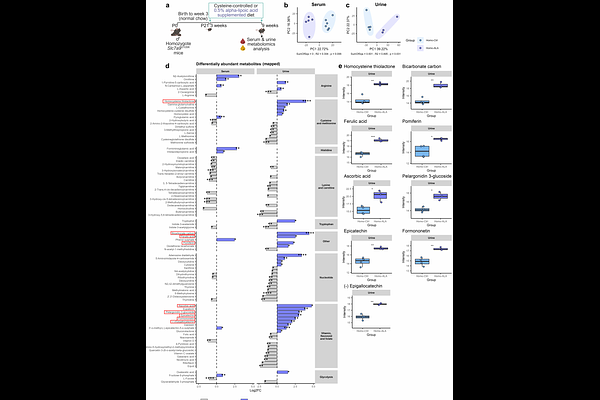
AbstractCystinuria is a rare inherited disease characterized by increased urinary cystine levels resulting in the formation of cystine stones in the urinary tract. Mutations in the genes encoding the cystine transporter complex, SLC3A1 and SLC7A9, are the primary drivers of the disease. Current mouse models used to study cystinuria rely on gene deficiency or spontaneous mutations in mice that do not accurately reflect the pathogenic mutations found in humans. To overcome this limitation, we generated novel Slc7a9G105R mice carrying the most common pathogenic single-point mutation in the SLC7A9 gene. Both male and female Slc7a9G105R mice developed a cystinuria phenotype by 9 weeks of age, characterized by substantial cystine stone formation and increased urinary cystine, lysine, arginine, and ornithine. Slc7a9G105R mice displayed distinct serum and urinary metabolite profiles mapped to dibasic amino acid pathways. Fecal metagenomics revealed that Slc7a9G105R mice had a heterogeneous microbiota with altered functional pathways, including increased L-cysteine biosynthesis. Depletion of the microbiota with antibiotics did not impact cystine stone burden but reduced urinary tract inflammation. Prophylactic or therapeutic dietary supplementation with alpha-lipoic acid reduced stone burden and inflammation, but it also caused damage to the urothelium. Untargeted metabolomics analysis following alpha-lipoic acid supplementation identified metabolites that can increase cystine solubility, reduce inflammation, and damage epithelial cells. Correlation analysis revealed novel serum biomarkers of stone burden, including blood urea nitrogen, 2-hydroxybutyric acid, 2-amino-2-thiazoline-4-carboxylic acid, and indole-3-acetylglycine. Collectively, the Slc7a9G105R mutant mouse model offers a precise, rapid-onset, and translational platform for investigating cystinuria pathogenesis and evaluating potential therapeutic strategies.