FIRST EVIDENCE OF PRESENCE OF RALSTONIA SOLANACEARUM IN THRIPS HAWAIIENSIS (THYSANOPTERA: THRIPIDAE) IN INDANG, CAVITE

FIRST EVIDENCE OF PRESENCE OF RALSTONIA SOLANACEARUM IN THRIPS HAWAIIENSIS (THYSANOPTERA: THRIPIDAE) IN INDANG, CAVITE
Manugo, A. C. N.; Mendoza, J.-V. S.; Jungco, J. M.; Tiongco, R. L.; Revilleza, B. A. C.; Dela Torres, R. L.; Balanban, O. D.; Dela Cueva, F. M.
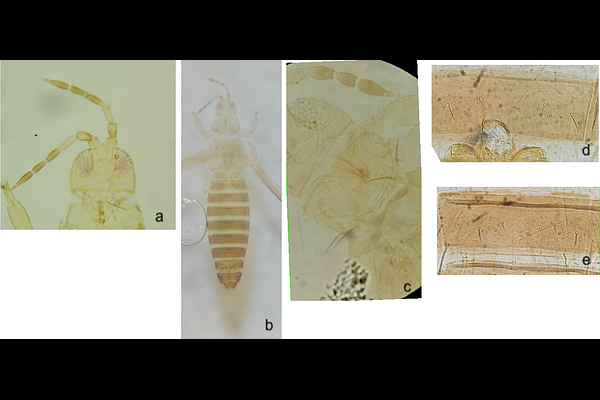
AbstractBugtok disease remains a major bacterial constraint of cooking banana production in the Philippines and is characterized by vascular discoloration, fruit browning, and progressive decline associated with members of the Ralstonia solanacearum species complex that infect banana inflorescences and fruits. This study investigated whether insects visiting Saba banana flowers in Indang, Cavite harbor R. solanacearum, with emphasis on the possible role of Thrips hawaiiensis as a possible candidate vector under field conditions. Destructive sampling was conducted three times in a Saba-monoculturing farm with high reported bugtok incidence, targeting flowers present at the time of collection and prioritizing insects recovered directly from banana inflorescences. Field-collected insects were surface sterilized, subjected to bacterial isolation, and confirmed by PCR using RSSC-specific and phylotype-specific primers; representative thrips were then morphologically identified. Preliminary acquisition assay with infected flowers for 1 and 3 days was conducted using field collected T. hawaiiensis from a non-Bugtok infested farm in Laguna. Among the insects recovered, thrips and stingless bees (Tetragonula spp.) were the most prominent flower visitors, but only thrips yielded internal detection of R. solanacearum after surface sterilization and homogenization, supporting the presence of the pathogen within the insect body rather than simple external contamination. Morphological characters of the positive specimens were consistent with T. hawaiiensis, including a pale antennal segment III, bicolored body, paired pronotal posteroangular setae, discal setae on abdominal sternite VII, and a complete comb on abdominal tergite VIII. In preliminary acquisition tests, healthy T. hawaiiensis exposed to infected flowers acquired the pathogen at mean positivity values of 1.75 plus or minus 1.50 after 1 day and 2.67 plus or minus 4.72 after 3 days, whereas control thrips remained negative. These findings provide field-based evidence that T. hawaiiensis can acquire R. solanacearum from infected Saba flowers and should be considered in Bugtok epidemiology and integrated disease management in Luzon.