Nup358 Sustains Intestinal Epithelial Homeostasis by Preventing Dvl1 Condensate Formation to Restrain Wnt Signaling

Nup358 Sustains Intestinal Epithelial Homeostasis by Preventing Dvl1 Condensate Formation to Restrain Wnt Signaling
D'Angelo, M.; Guglielmi, V.; Sakuma, S.; Zhu, E. Y.; Lam, D.
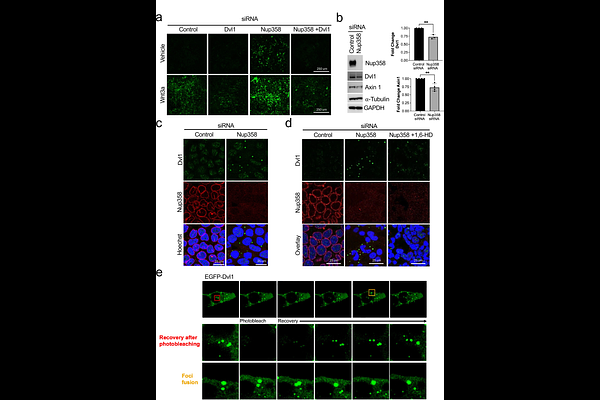
AbstractNucleoporins are increasingly recognized as tissue-specific regulators beyond their structural roles in the nuclear pore complex. Here, we identify nucleoporin Nup358 as a critical repressor of Wnt signaling required for intestinal epithelium integrity. Ablation of Nup358 in adult mice causes a catastrophic loss of crypt-villus architecture and disrupts the intestinal epithelial layer. Notably, while the intestinal stem cell (ISC) pool remains stable, the transit-amplifying (TA) progenitor compartment is depleted. Mechanistically, we show that the interaction of Nup358 with Dvl1 through its N-terminal domain inhibits Dvl1 spontaneous phase separation. In the absence of Nup358, Dvl1 biomolecular condensates promote Tankyrase-mediated degradation of Axin1, leading to the constitutive stabilization of b-catenin and ligand-independent Wnt activation, negatively impacting cell differentiation and TA progenitor survival. Our results demonstrate that Nup358 acts as a molecular safeguard that dampens Wnt signaling levels in intestinal crypts. By preventing Dvl1-mediated Wnt signal amplification, Nup358 allows ISCs to transition into the TA compartment and initiate the differentiation programs essential for intestinal homeostasis.