Gut bacteria degrade purines via the 2,8-dioxopurine pathway

Gut bacteria degrade purines via the 2,8-dioxopurine pathway
Liu, Y.; Zhou, Z.; Bryce Jarman, J.; Chen, H.; Miranda-Velez, M.; Terkeltaub, R.; Dodd, D.
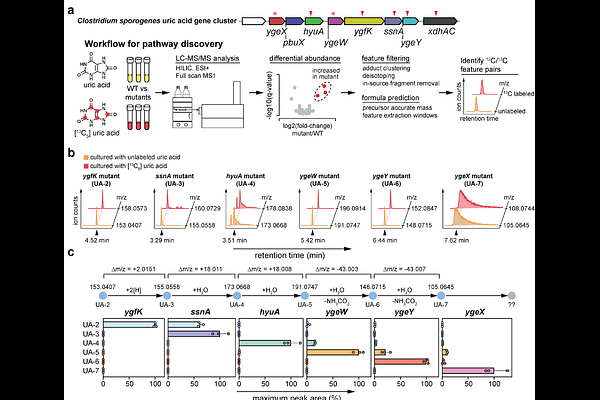
AbstractThe loss of uricase during hominid evolution has predisposed humans to hyperuricemia and gout, conditions with high global prevalence. In healthy individuals, approximately one-third of urate is excreted into the intestinal tract1 where bacteria consume this purine aiding in its elimination2,3. However, the molecular details of purine metabolism in the gut microbiome remain unknown. Here we uncover the 2,8-dioxopurine pathway, a previously unrecognized anaerobic route for purine degradation in gut bacteria. This pathway uses a novel selenium-dependent enzyme, 2,8-dioxopurine dehydrogenase (DOPDH), and seven additional enzymes that together link purine metabolism to ATP generation and short chain fatty acid production. Competition experiments in gnotobiotic mice demonstrate that bacteria harboring this pathway exhibit a fitness advantage, with wild-type bacteria rapidly outcompeting a DOPDH-deficient strain. These findings highlight a host-microbe symbiosis, where host-secreted urate fosters a metabolic niche for bacteria that break it down. By elucidating this pathway, our study provides new avenues to modify and enhance intestinal elimination of urate, which has therapeutic implications for treating hyperuricemia and gout, conditions that affect millions of adults worldwide.