Bioorthogonal Catalytic Microneedles Based on a Cytotoxic PEI Matrix for Synergistic Melanoma Therapy

Bioorthogonal Catalytic Microneedles Based on a Cytotoxic PEI Matrix for Synergistic Melanoma Therapy
Xu, Q.-H.; Huang, E.-K.; Chu, Y.-J.; Yao, X.; Liu, P.-N.
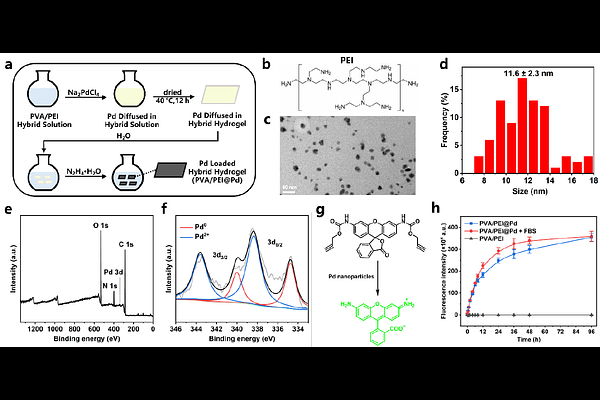
AbstractMicroneedle (MN) patches have emerged as a highly efficient platform for localized drug delivery, showing great promise in cancer therapy due to their ability to enable precise drug administration. However, conventional MN systems are limited by the low drug-loading capacity of their tips and primarily rely on biologically inert, non-therapeutic matrices for structural support, which restricts further gains in antitumor efficacy. Herein, we present a strategy turning toxicity into therapy by constructing palladium nanoparticle-loaded polyvinyl alcohol/polyethyleneimine (PVA/PEI@Pd) hydrogel microneedles (PPPd-MNs), which exploit the intrinsic cytotoxicity of PEI for synergistic melanoma therapy. The PPPd-MNs efficiently catalyze the deprotection of a doxorubicin prodrug (P-DOX), enabling in situ generation of active doxorubicin (DOX). Notably, the PEI matrix serves a dual function: acting as a robust ligand to stabilize Pd catalysts and functioning as a therapeutic agent that disrupts cancer cell membranes. Both in vitro and in vivo experiments demonstrate that the combination of Pd-mediated bioorthogonal activation of DOX and PEI-induced membrane damage achieves a remarkable synergistic therapeutic outcome in a murine melanoma model, resulting in a tumor inhibition rate of up to 98%. This work repurposes the inherent cytotoxicity of the carrier material as an active therapeutic component, offering a novel paradigm for the design of high-performance bioorthogonal catalytic systems.