Blautia wexlerae Transforms Dietary Fatty Acids to Activate Enteroendocrine Signaling and Improve Metabolic Health in Mice and Humans

Blautia wexlerae Transforms Dietary Fatty Acids to Activate Enteroendocrine Signaling and Improve Metabolic Health in Mice and Humans
Zhang, Y. J.; Tanofsky-Kraff, M.; Reyes, M. M.; Zeve, D.; Ehrmann, K. J.; Lee, J.; Schaan, A. P.; Prado, A.; Ma, X. C.; Parker, M. N.; Brady, S. M.; Saint-Denis, E.; Sharma, K.; Frintu, B.; Richmond, C.; Desai, N.; Yeliseyev, V.; Bry, L.; Avila-Pacheco, J.; Clish, C. B.; Quealy, M.; Clardy, J.; Breault, D.; Ding, Y.; Wang, X.; Jost, M.; Poyet, M.; Groussin, M.; Yanovski, J. A.; Lencer, W. I.; Alm, E. J.
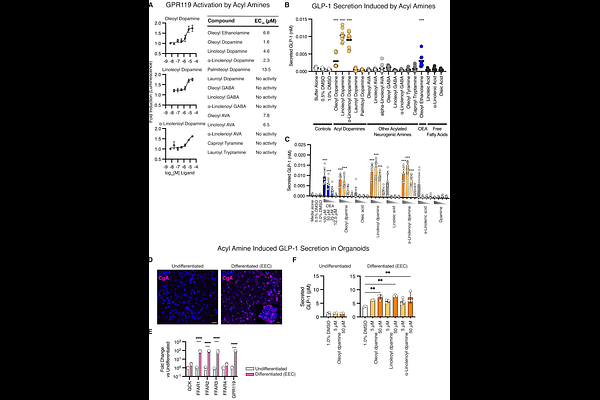
AbstractMetabolites produced by the human gut microbiome influence host metabolic health, but how this occurs remains incompletely defined. Here, we report that a common human gut commensal, Blautia wexlerae, converts dietary fats into bioactive metabolites that induce gut hormone production to affect glucose metabolism and suppress appetite. We found that colonization with Blautia wexlerae correlated with healthy eating behaviors in humans, and that Blautia wexlerae uniquely encoded an acyl transferase capable of producing acyl amines from nutrient substrates. The Blautia acyl amines stimulated human enteroendocrine cells to secrete GLP-1 and other gut peptide hormones more potently than endogenously produced acyl amines. When fed to mice, they improved glycemic control and decreased appetite. In humans, higher stool levels of Blautia DNA encoding acyl amine synthesis genes correlated with leanness and decreased dietary fat intake. These results define a mechanism of action for how Blautia wexlerae affects host metabolic control.