Electrostatic control of chromatin compaction safeguards against apoptotic DNA release

Electrostatic control of chromatin compaction safeguards against apoptotic DNA release
Spicer, M. F. D.; Wijma, S.; Schütte, N.; Huertas, J. F. D.; Maristany, M. J.; Lopez, J. I. P.; Chen, L.; Alaabo, M.; Rosen, M. K.; Collepardo-Guevara, R.; Gerlich, D. W.
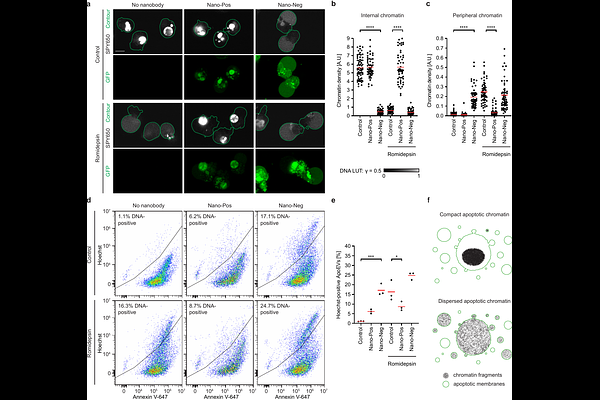
AbstractApoptosis involves extensive intracellular reorganisation to facilitate the clearance of dying cells. A key step in this process is the destruction of the genome through fragmentation by caspase-activated endonuclease (CAD). Rather than dispersing after CAD-mediated cleavage, DNA fragments are compacted into a dense chromatin compartment. However, the underlying mechanism and biological relevance of this compaction remain unknown. Here we show that global deacetylation of histone tails promotes chromatin compaction during apoptosis, preventing DNA release into apoptotic extracellular vesicles. Using synthetic effectors that modulate nucleosome electrostatics independently of histone modifications, we demonstrate that electrostatic attraction alone is sufficient to compact and sequester fragmented chromatin. These findings reveal a mechanism by which global reprogramming of histone modifications coordinates fragmentation of the genome with its physical sequestration during apoptosis. Furthermore, our synthetic approach provides a tool to probe the role of physical forces in genome organisation across diverse biological contexts.