Coulomb blockade in microscopic material defects as a source of decoherence and noise in solid-state quantum circuits

Coulomb blockade in microscopic material defects as a source of decoherence and noise in solid-state quantum circuits
R. Banerjee, L. P. Lindoy, M. Hegedus, A. Hutcheson, T. Hawkins, E. Daghigh-Ahmadi, S. Samaddar, T. Barker, J. P. Goff, A. Ya. Tzalenchuk, I. Rungger, S. E. de Graaf
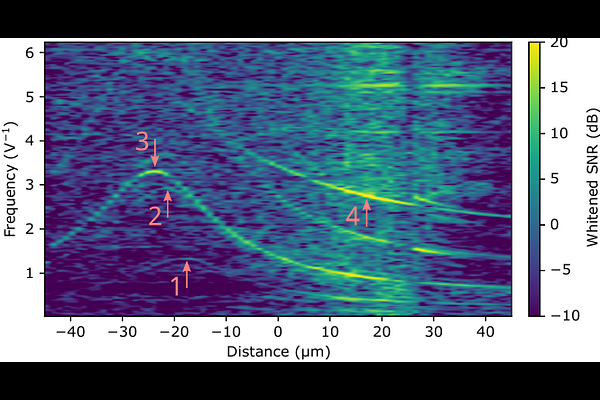
AbstractA critical limitation of solid-state quantum devices arises from the materials from which they are fabricated: uncontrolled surfaces, interfaces, and structural imperfections introduce numerous sources of loss and decoherence. Despite extensive efforts, linking these decoherence mechanisms to their microscopic material origins -- essential for developing effective mitigation strategies -- remains an outstanding challenge that has slowed coherence improvements. Here, using scanning gate microscopy on live superconducting circuits we identify a previously unrecognised decoherence mechanism originating from Coulomb blockade and microwave-driven charge tunnelling in metallic grains. Such grains are ubiquitous in thin-film devices fabricated by standard lithography processes. By characterising multiple defects across different devices, we find such defects to be as common and as debilitating to device performance as two-level system (TLS) defects, while originating from a fundamentally different physical mechanism. Importantly, conventional characterisation techniques would misattribute this loss to other, microwave power-independent processes. Our observations thus reveal a widespread source of decoherence in superconducting circuits, challenging the prevailing paradigm that coherence lifetimes are primarily limited by TLS defects. Eliminating metallic grains during fabrication provides a clear and practical route to suppress this mechanism, offering a pathway towards improved coherence and reduced noise in microwave-based solid-state quantum devices.