A potential role for acyl-phosphate in the coordination of phospholipid and lipopolysaccharide synthesis in Escherichia coli

A potential role for acyl-phosphate in the coordination of phospholipid and lipopolysaccharide synthesis in Escherichia coli
DeHart, T. G.; Fivenson, E. M.; de Bakker, V.; Sakenova, N.; Bernhardt, T. G.
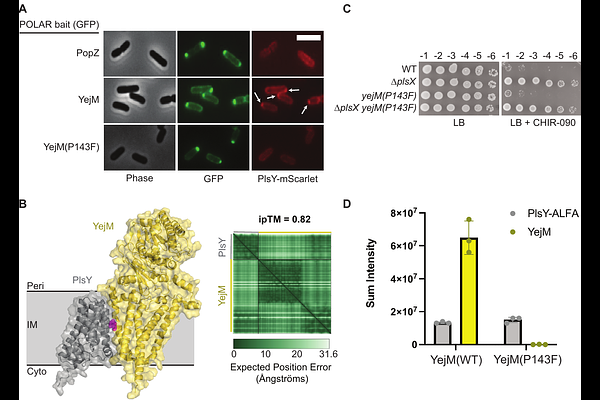
AbstractThe envelope of Gram-negative bacteria like Escherichia coli is multilayered with two membranes sandwiching a peptidoglycan cell wall. The inner membrane is a typical phospholipid bilayer whereas the outer membrane is asymmetric with phospholipids in the inner leaflet and lipopolysaccharide (LPS) in the outer leaflet. We recently discovered that inactivation of the conserved peptidoglycan synthesis machinery responsible for cell elongation causes defects in both peptidoglycan and LPS synthesis in E. coli. This finding suggests that the isolation of suppressors that rescue the growth phenotype caused by an impaired cell elongation system is an attractive means of identifying factors involved in coordinating the biogenesis of different envelope layers. Here, we report the results of a global, transposon sequencing-based screen for such suppressors. The inactivation of a number of factors including the phospholipid synthesis enzyme PlsX was found to partially suppress the growth defects of a cell elongation mutant. Deletion of plsX also conferred increased resistance to CHIR-090, an inhibitor of the committed step of LPS synthesis catalyzed by LpxC, suggesting that loss of PlsX function stimulates LPS synthesis. Evidence is presented that increased CHIR-090 resistance is not mediated by changes in the activity of the proteolytic system (YejM-LapB-FtsH) controlling LpxC turnover. Rather, our results are consistent with a model in which the phospholipid precursor acyl-phosphate produced by PlsX serves as an inhibitor of LpxC to lower the rate of LPS synthesis when phospholipid synthesis capacity is reduced.