A Glycolysis-Fatty Acid Metabolic Axis Shapes Human Tfh Cell Function

A Glycolysis-Fatty Acid Metabolic Axis Shapes Human Tfh Cell Function
Jha, S. N.; Nikam, B.; Jena, D.; Sachan, S.; Swain, M.; Coshic, P.; Raghav, S. K.; Gupta, N.
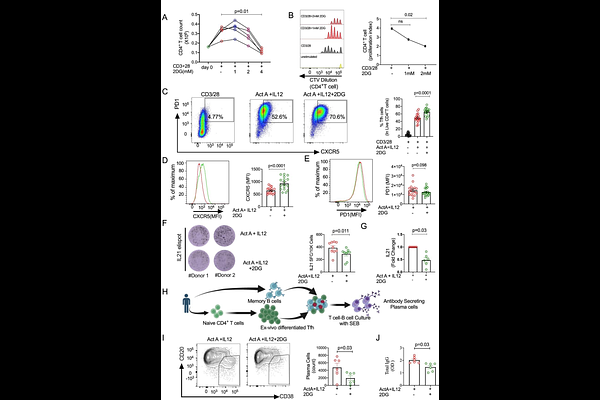
AbstractFollicular helper T (Tfh) cells orchestrate germinal centre-derived humoral immunity by providing essential help to B cells. Despite their key role in humoral immunity, the metabolic processes that guide Tfh differentiation and functions in human remain poorly understood. In this study, we used a human ex vivo Tfh differentiation model to investigate how key metabolic pathways influence Tfh cell differentiation and helper function. Human naive CD4+ T cells were differentiated into Tfh cells, and glycolysis was selectively inhibited during early differentiation to assess its effects on cell fate, function, and transcriptomic landscape. Unexpectedly, early glycolytic inhibition enhanced Tfh cell differentiation but significantly impaired their function, including reduced IL-21 secretion and diminished B cell help. Transcriptomic analyses further revealed downregulation of fatty acid metabolic pathways when glycolysis was inhibited. To better understand this link, we disrupted fatty acid synthesis and oxidation and observed a marked decline in helper functions, including IL-21 and IFN-gamma production. Interestingly, acetate supplementation partially restored IFN-gamma; secretion in glycolysis inhibited conditions, but not IL-21, suggesting that some functional requirements cannot be compensated by alternative metabolic sources. These findings identify glycolysis during early differentiation as a key regulator of human Tfh cells fate and reveal a glycolysis-dependent fatty acid metabolic axis that selectively controls Tfh function. This metabolic checkpoint provides mechanistic insight into tuning Tfh cells and Tfh-driven humoral immunity in vaccination and autoimmunity.