Extracellular Vesicles Derived from Activated Dendritic Cells Loaded with Curcumin Promote Early Activation-associated Functional and Molecular Reprogramming of Primary CD8+ T Cells

Extracellular Vesicles Derived from Activated Dendritic Cells Loaded with Curcumin Promote Early Activation-associated Functional and Molecular Reprogramming of Primary CD8+ T Cells
Dragan, S. M.; Patras, L.; Meszaros, M.-S.; Pavel, O. I.; Munteanu, C. V. A.; Borlan, R.; Focsan, M.; Martinez, A. B.; Melero, A.; Saveanu, L.; Banciu, M.; Sesarman, A.
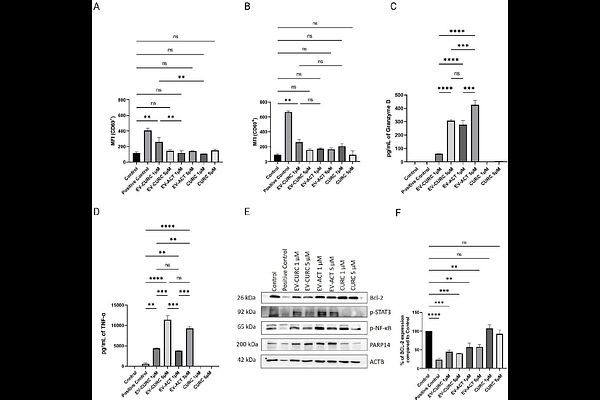
AbstractExtracellular vesicles (EVs) derived from activated dendritic cells (DCs) are promising cell-free mediators capable of shaping CD8+ T-cell responses. However, their early molecular and functional effects on CD8+ T cells remain incompletely characterized, and whether engineering activated DC-derived EVs with immunomodulatory cargo can fine-tune these responses remains largely unexplored. Here, we investigated whether curcumin loading into EVs derived from CpG-activated and peptide-pulsed DC2.4 cells (EV-ACT) modulates early activation of primary CD8+ T cells. EVs were isolated by ultrafiltration coupled with size-exclusion chromatography (UF-SEC) and characterized physicochemically and molecularly. Exploratory proteomic profiling identified an activation-associated EV protein signature enriched in antigen-processing and immune-related pathways. Curcumin loading achieved an encapsulation efficiency of 16.4% while preserving EV properties, and spectral confocal fluorescence microscopy revealed heterogeneous fluorescence emission patterns consistent with distinct EV-associated curcumin microenvironments. Following rapid cellular association, EV-ACT promoted early CD8+ T-cell activation, inducing an effector-like phenotype characterized by increased CD69 expression, TNF- and Granzyme B production, and reduced Bcl-2 levels without compromising cell viability. Unlike free curcumin, EV-mediated curcumin delivery selectively reinforced these immunostimulatory responses by significantly increasing CD69 expression and STAT3 phosphorylation, sustaining early activation-associated functional and molecular reprogramming of primary CD8+ T cells.