Gene-drug interactions identify genomic loci that enhance statin effectiveness in lowering LDL cholesterol.

Gene-drug interactions identify genomic loci that enhance statin effectiveness in lowering LDL cholesterol.
Verhulst, B.; Harris, J.; Adams, A. M.; Benstock, S. E.; Tong, C. W.; Case, A. J.; Hettema, J. M.
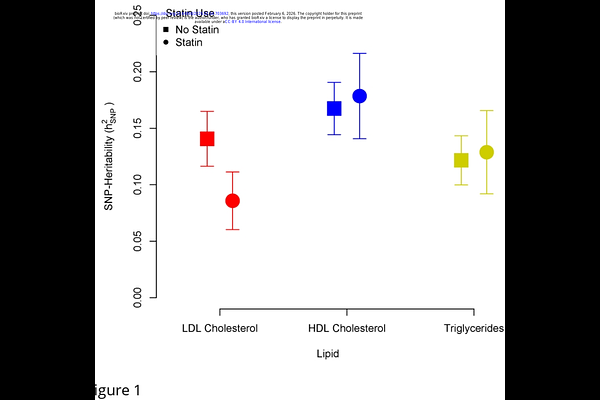
AbstractHyperlipidemia, and high low-density lipoprotein cholesterol (LDL-c) in particular, is a risk factor for cardiovascular disease, including atherosclerosis, myocardial infarction, and stroke. Nearly 200 million people worldwide take HMG-CoA reductase inhibitors, commonly known as statins, to lower their LDL-c. If statins interfere with the genetic pathways that endogenously increase the risk for hyperlipidemia, gene-statin interactions may identify genomic variants, and thereby individuals with those genotypes, that are particularly sensitive to these medications. We performed a series of genome-wide gene-statin interaction analyses in the UK Biobank for LDL-c and two related lipids: high-density lipoprotein cholesterol (HDL-c) and triglycerides (TG). We identified five genome-wide significant gene-statin interactions for LDL-c, two interactions for HDL-c, and four interactions for TG. Importantly, only the SNP-based heritability of LDL-c was reduced by statin use. Using data from All of Us, we replicated all five significant gene-statin interaction loci for LDL-c in the European-like ancestry sample, two loci in the Americas-like ancestry sample, and one locus in the African-like ancestry sample. We also identified fifteen loci that remained associated with LDL-c despite statin treatment, highlighting potential additional genetic targets for drug development, enhancement, and repurposing. These loci include gene-targets for the recently developed hyperlipidemia drug class (PCSK9 inhibitors) validating our approach to finding new treatments. These results are an important step towards personalized medicine for patients with hyperlipidemia.