Mechanobiology-guided drug repurposing identifies budesonide as an inhibitor of stiffness-induced PDAC aggressiveness

Mechanobiology-guided drug repurposing identifies budesonide as an inhibitor of stiffness-induced PDAC aggressiveness
Mas, S.; Cristiano, M.; Ibello, E.; Avallone, A.; Frascogna, C.; Sainz, B.; Lonardo, E.; Altucci, L.; Cobellis, G.; Patriarca, E. J.; Netti, P. A.; Minchiotti, G.; Panzetta, V.; D'Aniello, C.
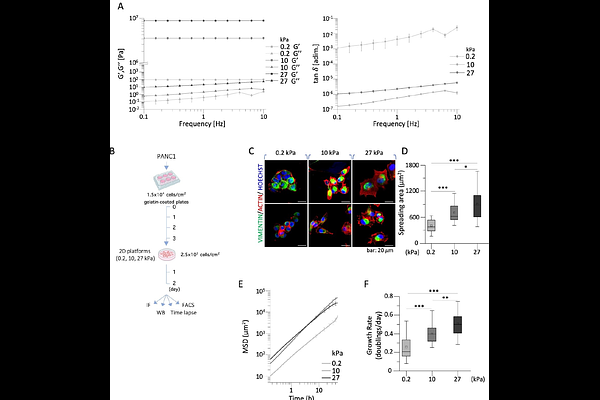
AbstractPancreatic ductal adenocarcinoma (PDAC) develops within a desmoplastic and stiffened microenvironment that critically shapes tumor progression and therapeutic resistance, yet these features are not reproduced by conventional rigid plastic culture systems. Here, we leverage a tuneable bioengineered platform that mimics stromal stiffening to investigate how mechanical cues regulate PDAC cell behaviour and to identify pharmacological strategies that counteract stiffness-driven malignancy. We show that increasing matrix stiffness promotes key hallmarks of PDAC aggressiveness, including enhanced cell spreading, focal adhesions maturation, and cytoskeletal tension. Notably, we identify the glucocorticoid budesonide as a selective suppressor of stiffness-induced malignant phenotypes. Transcriptomic profiling reveals that budesonide counteracts stiffness-associated gene programs, prominently affecting pathways governing cytoskeletal dynamics, nuclear envelope organization, and YAP nucleocytoplasmic transport. Consistently, budesonide reduced force transmission to the nucleus, restoring nuclear wrinkling and constraining nuclear size and shape. These effects are mediated through both glucocorticoid receptor-dependent and -independent mechanisms, revealing a previously unrecognized mode of action. Together, our findings establish mechanical context as a critical determinant of PDAC vulnerability and identify budesonide as a candidate for therapeutic repurposing to target stiffness-driven cancer progression.