Blood biomarkers and breed genetics of aging in pet dogs

Blood biomarkers and breed genetics of aging in pet dogs
Sohrab, V.; White, M. E.; Harrison, B. R.; Bierman, R.; Marye, A.; Morrill Pirovich, K.; Genereux, D. P.; Megquier, K.; Li, X.; Kenney, B.; Reichel, C.; Dog Aging Project Consortium, ; Snyder-Mackler, N.; Akey, J. M.; Promislow, D.; Chen, F. L.; Karlsson, E.
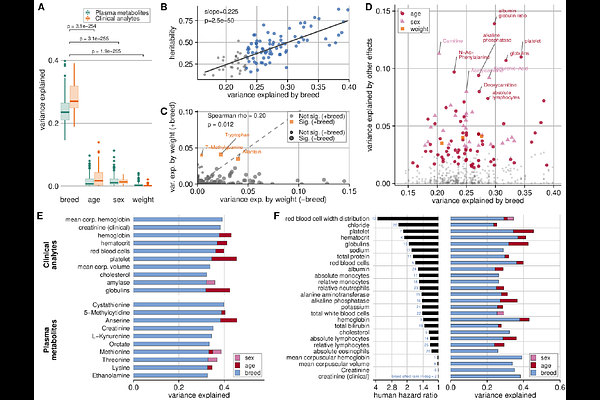
AbstractPet dogs share human-like environments while aging on a compressed timescale, making them a powerful translational model for aging research. Using genomic and phenotypic data from 7,627 dogs in the Dog Aging Project, including 976 profiled for 159 blood metabolites and clinical analytes, we generated the first GWAS catalog in dogs. Blood traits map to orthologous loci in dogs and humans, indicating deeply conserved pathways. Breed ancestry explains substantial variance in blood traits, and selection on visible characteristics such as fur type has pleiotropic metabolic effects. Leveraging mosaic ancestry in mixed-breed dogs and longitudinal mortality data, we identify blood traits elevated in short-lived breeds that predict individual mortality risk - including globulin and potassium - and protective traits enriched in long-lived breeds, such as ethanolamine. Although some aging-associated traits relate to growth hormone pathways, many do not, indicating that aging in dogs is multifactorial. These findings establish dogs as a translational system for identifying genetic determinants and biomarkers of aging relevant to extending healthy lifespans.