The curious case of a Chilean copepod (Tigriopus aff. angulatus) genome assembly

The curious case of a Chilean copepod (Tigriopus aff. angulatus) genome assembly
Neylan, I. P.; Vaidya, R.; Dassanayake, M.; Navarrete, S. A.; Kelly, M. W.; Faircloth, B. C.
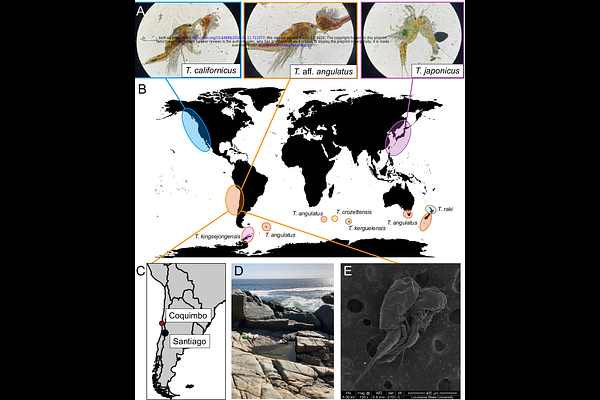
AbstractTigriopus copepods are found in splash pools on all seven continents from the equator to Arctic and Antarctic regions. Given their geographic distribution, frequent exposure to extreme environmental conditions in the high intertidal zone, and strong signatures of local adaptation, these copepods have become models for exploring patterns of adaptation to stressful environments. However, most studies focus on a relatively small subset of Tigriopus species, and there are few genome resources representing the diversity of Tigriopus species and populations. Here, we combine long-read, Pacific Biosciences HiFi data with short-read, Illumina HiC and RNA-seq data to assemble and annotate a genome sequence representing a Tigriopus population from the coast of central Chile. Based on the level of divergence that we observed in mitochondrial genes, we also performed a comparison of morphological characteristics between individuals of this population and members of the T. angulatus complex. The haplotypes that we assembled (qhTigAngs1.1.hap1 & qhTigAngs1.1.hap2) are placed into 12 major scaffolds (N50 18-19 Mbp, L50 6-7), equivalent to the number of chromosomes in other Tigriopus species. BUSCO and k-mer analyses of each haplotype and BUSCO analyses of gene models are relatively complete (95-99%) with respect to gene and k-mer content. Analyses of mitochondrial data also suggest that the Chilean population of Tigriopus we sampled may represent a novel species that we call Tigriopus aff. angulatus. These genomic resources will help us understand the diversity and structure of Tigriopus species and populations as well as facilitate future comparisons of adaptation across parallel environmental gradients.