Heavy Metal-Resistant, Plastic-Degrading Bacillus sp. Isolated from Landfill Leachate: Identification and Characterization

Heavy Metal-Resistant, Plastic-Degrading Bacillus sp. Isolated from Landfill Leachate: Identification and Characterization
Antu, U. S.; Sarker, A.; Haque, N.; Karmakar, J.; Khaleque, A.; Hossain, M. S.; Parvez, M. A. K.
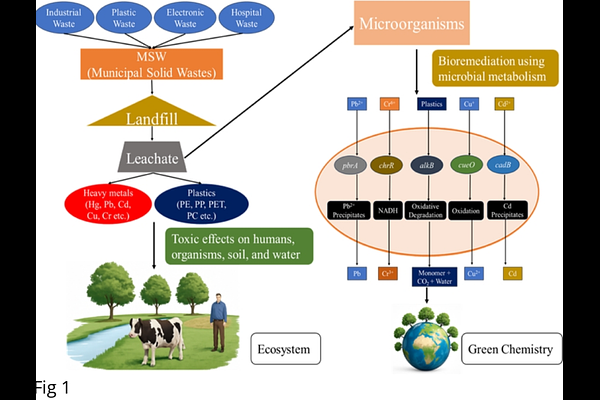
AbstractLandfill leachates in rapidly urbanizing regions like Dhaka present a complex ecological challenge owing to the concurrent buildup of heavy metals and plastic waste. Despite the severity of this pollution, the role of indigenous multi-functional bacteria in mitigating these mixed contaminants remains poorly understood. This research sought to isolate and characterize bacteria resistant to heavy metals and capable of degrading plastics from the Aminbazar and Matuail landfills and evaluate their bioremediation potential. Physicochemical analysis confirmed extreme contamination, with heavy metal levels (Pb, Cr, Cd, Cu) significantly exceeding WHO safety limits. Out of 81 isolates, nearly half exhibited multi-metal resistance and polyethylene (PE) degradation capacity. Statistical analysis showed a significant correlation between plastic degradation and multi-metal tolerance, suggesting a linked evolutionary adaptation. Enzymatic assays confirmed enzymes (e.g., urease, catalase, citrate and esterase) as drivers of both plastic degradation and heavy metal tolerance in leading isolates. Molecular screening identified the resistance genes pbrA and alkB, while the high prevalence of Class 1 integrons (80% in pbrA-positive isolates) points to a high potential for horizontal gene transfer in these environments. Furthermore, MALDI-TOF MS identified the functional isolates as Bacillus sp. with FTIR verifying the contribution of specific cell-surface functional groups to metal biosorption. These results underscore the promise of native Bacillus strains as promising agents for the development of sustainable, integrated biotechnologies for landfill restoration and complex waste management.