CRISPR-Cas9 and PiggyBac Mediated Genetic Modification of Sand Fly Vectors Targeting Olfactory and Non-Lethal Phenotypic Genes

CRISPR-Cas9 and PiggyBac Mediated Genetic Modification of Sand Fly Vectors Targeting Olfactory and Non-Lethal Phenotypic Genes
Edwards, R. T. M.; Brandner Garrod, L.; Bhattacharyya, T.; Vomackova Kykalova, B.; Telleria, E. L.; Volf, P.; Yeo, M.
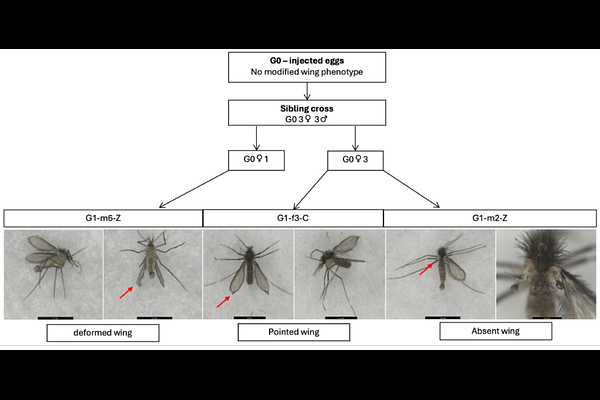
AbstractLeishmania spp. are protozoan parasites transmitted by female sand flies (Diptera) that cause a spectrum of devastating human pathologies affecting millions. Control of leishmaniases has proved immensely difficult: vector control strategies remain challenging and available chemotherapeutics imperfect. Gene editing of insect vectors offers prospects to interrupt disease transmission; for example by introducing antiparasite effectors or heritable modifications of genes implicated in fecundity. Here we present convergent evidence for successful gene editing using both CRISPR-Cas9 and PiggyBac approaches in two medically important sand fly species (Lutzomyia longipalpis and Phlebotomus papatasi). Targeted mutagenesis in G and G generations is supported by three independent lines of evidence, namely observable phenotypic changes, PCR-based detection assays, and confirmatory in silico algorithmic analysis of gene sequences which together provide a robust demonstration of targeted genome editing.