METTL1 regulates glioma proliferation through internal m7G methylation of EPHA2

METTL1 regulates glioma proliferation through internal m7G methylation of EPHA2
Xu, T.; Yu, P.; Sun, Y.; Huang, J.; Fang, X.; Lv, J.; Yang, S.; Li, G.
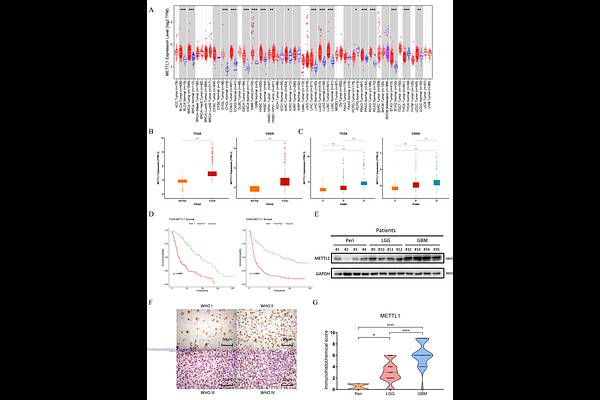
AbstractBackgroundMethyltransferase-like 1 (METTL1) is highly expressed in organs like the pancreas but less so in the brain. The METTL1-WDR4 complex catalyzes N7-methylguanosine (m7G) methylation in tRNA, miRNA, mRNA, and rRNA, which impacts RNA stability and function. These modifications affect mRNA translation and tRNA functionality, influencing protein production and cellular activities. Such modifications can regulate tumor growth, invasion, and metabolism by selectively controlling protein expression. MethodGene expression data from public databases were analyzed to compare METTL1 expression in normal and tumor tissues. Western blot (WB) and immunohistochemistry (IHC) were used to quantify METTL1 levels in glioma samples and assess their prognostic significance. Cell viability, migration, invasion, and proliferation were evaluated using Cell Counting Kit-8 (CCK-8), wound healing, Transwell, cell cycle analysis, and colony formation assays. RNA immunoprecipitation PCR (RIP-PCR) identified m7G methylation sites on EPHA2 mRNA, and RNA stability was assessed with actinomycin D. ResultsBioinformatics analysis revealed that METTL1 is overexpressed in gliomas, correlating with poor prognosis. Knockdown of METTL1 significantly affected cell proliferation, migration, and invasion. RNA sequencing (RNA-seq) and m7G analysis identified EPHA2 as a downstream target, influencing the cell cycle via the AKT pathway. RIP and methylated RNA immunoprecipitation (MeRIP) confirmed two m7G sites on EPHA2 mRNA regulated by METTL1. Small interfering RNA (siRNA)-mediated METTL1 knockdown in EPHA2 mutants affected mRNA stability. Rescue experiments restored cell proliferation and AKT pathway gene expression. ConclusionMETTL1 methylates EPHA2 mRNA, enhancing its stability and expression, which activates the AKT signaling pathway and influences glioma cell proliferation. METTL1 could be a potential therapeutic target in glioma treatment.