The IL-1 Family Controls Acute Mucosal Fungal Infection and Mucosal-Systemic Dissemination.

The IL-1 Family Controls Acute Mucosal Fungal Infection and Mucosal-Systemic Dissemination.
Griffiths, J. S.; Kempf, A.; Pickering, R. J.; Priest, E. L.; Paulin, O. K. A.; Lortal, L.; Donkin, A.; Hepworth, O. W.; Wickramasinghe, D. N.; Pellon, A.; Lau, A.; Papini, H.; Gaffen, S. L.; Richardson, J. P.; Naglik, J. R.
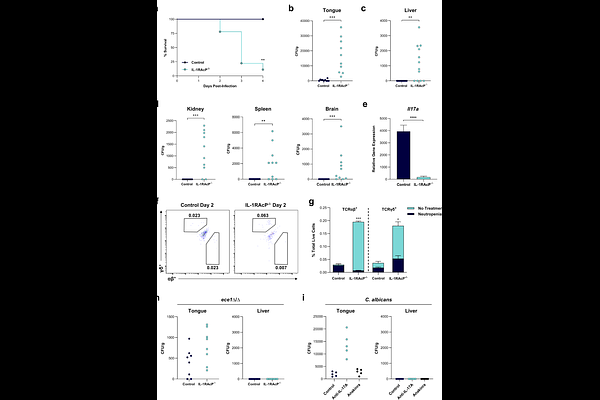
AbstractCandida albicans is a major opportunistic pathogen in humans that is capable of breaching mucosal barriers and causing severe systemic infections with high mortality. How the host controls mucosal infection and prevents dissemination remains unclear but is essential for improving disease outcomes. Here, we demonstrate that C. albicans induces specific IL-1 family members, which are critical for initiating mucosal protection by controlling antimicrobial peptides, IL-17, and neutrophil responses. Loss of combined IL-1 family signalling led to severe mucosal C. albicans infection, which was eventually resolved by a potent neutrophil response. However, in neutropenic conditions (a key risk patient factor) abolishing IL-1 family signalling resulted in C. albicans dissemination, predominantly to the liver, mirroring clinical disease and leading to mortality. This study highlights the IL-1 family as a key initiator of mucosal immunity, restricting mucosal invasion and cooperating with neutrophils to prevent life-threatening systemic infections.