Effects of Bimodal Olfactory and Mechanosensory Inputs in the Antennal Lobe of the Honeybee Apis mellifera

Effects of Bimodal Olfactory and Mechanosensory Inputs in the Antennal Lobe of the Honeybee Apis mellifera
Mahoney, S.; Joshi, S.; Smith, B.; Patel, M.; Lei, H.
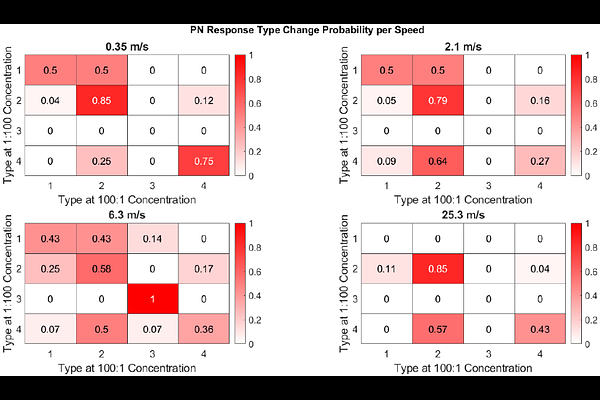
AbstractAnimals often aggregate information from multiple different sensory modalities to accurately assess and react to a stimulus. It is often assumed that cross-modality integration mostly occurs at high-level processing centers, such as the mammalian cortex or insect mushroom bodies. However, we hypothesized that integration could occur relatively early in the sensory pathways. The insect antennal lobe is one such location, receiving direct inputs from the antennae via the antennal nerve. These inputs are highly multimodal, including olfactory, mechanosensory, and gustatory information, all of which are relevant to foraging honeybees (Apis mellifera). Here we assess integration by recording electrophysiological spike data within the honeybee antennal lobe while exposing the bee to various combinations of wind speed and odor concentration. This paper accompanies another publication by Joseph Reed and Mainak Patel approaching the same question from a modelling perspective, where their model corroborates our data and vice versa. Together, we show that integration occurs within this early layer of processing, while also demonstrating the complex relationship of these two closely-linked stimuli.