Optochemical control over mRNA translation by photocaged phosphorodiamidate morpholino oligonucleotides in vivo

Optochemical control over mRNA translation by photocaged phosphorodiamidate morpholino oligonucleotides in vivo
Tarbashevich, K.; Ghosh, A.; Das, A.; Kuilya, D.; Nath Shrama, S.; Sinha, S.; Raz, E.
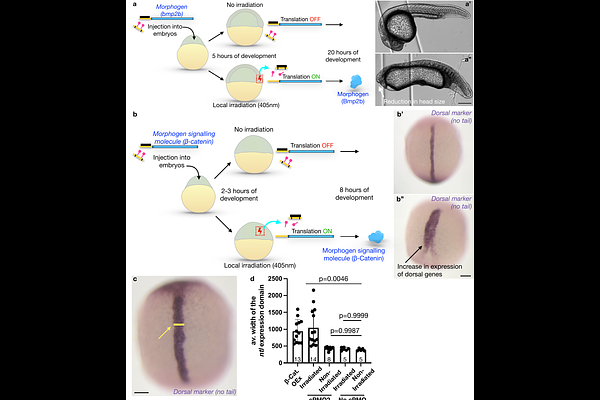
AbstractA key regulatory step in protein synthesis is the initiation of mRNA translation. We developed an efficient, robust, and broadly applicable system for light-induced protein translation to control the production of proteins of interest and study their function. The method is based on the displacement of a single type of antisense morpholino from RNA by the uncaged guanidinium-linked morpholino (GMO)- phosphorodiamidate morpholino oligonucleotide (PMO) chimera upon UV irradiation. The GMO-PMO chimera designed here is cell-permeable and the GMO part can be produced employing a new mercury-free approach compatible with the synthesis on solid support. We demonstrate the function of this novel optochemical approach in live embryos by inducing, at desired times and locations, the expression of proteins that label specific cells, ablate tissue regions, and affect embryonic development. Together, our results demonstrate that the cell-permeable GMO-PMO chimera offers a unique strategy for controlling the function of mRNAs of interest. This method allows for the production of proteins at specific times and positions within live organisms, facilitating numerous applications in biomedical research and therapy.