A Novel Plasmid-Encoded Mobile Colistin Resistance Gene mcr-13.1 Detected in Escherichia coli Isolated from Grassland.

A Novel Plasmid-Encoded Mobile Colistin Resistance Gene mcr-13.1 Detected in Escherichia coli Isolated from Grassland.
Alawi, M.; Do, T. T.; Burgess, C. M.; Brennan, F.; Walsh, F.
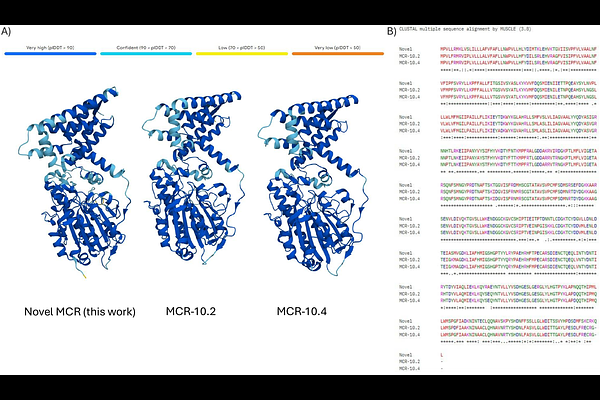
AbstractPlasmid-encoded mobile colistin resistance (mcr) genes have raised concern due to dissemination potential. While mcr variants are reported across One Health compartments, they remain unreported in grass. This study characterises a novel mcr variant (mcr-13.1), detected in Escherichia coli isolated from the grass phylosphere within an agricultural grassland. The two mcr-positive isolates were clonal copies isolated at timepoints eight weeks apart. They belonged to the serotype O17:H18 and were of the sequence type ST394. The E. coli were phenotypically susceptible to {beta}-lactams, aminoglycosides, quinolones, sulphonamides, phenicols, tetracyclines, diaminopyrimidine and colistin (Minimum Inhibitory Concentration (MIC) = 0.5 g/mL). The mcr-13.1 gene was encoded on an IncFIB plasmid. This plasmid was transferable by conjugation but the colistin MIC of the E. coli J53 transconjugant did not change (0.5 g/mL). Further, cloned pUC19::mcr-13.1 did not alter the colistin MIC for E. coli DH5 (0.25 g/mL). The translated amino acid sequence showed highest homology (82 %) to MCR-10.2 and MCR-10.4. Our findings identify grass as a previously unrecognised reservoir for E. coli carrying mobile mcr genes, reports the identification of the novel mcr-13.1 variant from this niche and demonstrates the importance of genomic screening in identifying mcr genes that would otherwise remain undetected.