Trypanosomal MICOS is assembled on non-respiring mitochondrial crista precursors and associates with two integral microproteins

Trypanosomal MICOS is assembled on non-respiring mitochondrial crista precursors and associates with two integral microproteins
Boudova, M.; Wagner, T.; Bily, T.; Tesarova, M.; Benz, C.; Hashimi, H.
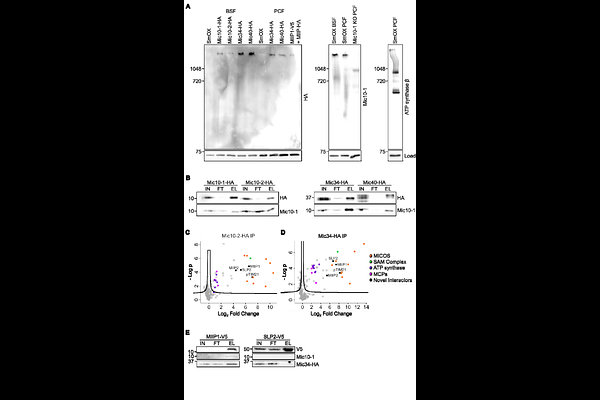
AbstractThe mitochondrial contact site and cristae organizing system (MICOS) is a multiprotein complex that shapes crista junctions and maintains inner and outer membrane contacts. MICOS coordinates the assembly of electron transport chain complexes, a prerequisite for cellular respiration. Indeed, MICOS is lost in eukaryotes that dispensed with cellular respiration, suggesting that its assembly depends on the presence of an active respiratory chain. Trypanosoma brucei provides a unique system to test this hypothesis as its mitochondrion undergoes developmentally regulated remodeling. In the insect stage, the mitochondrion contains cristae with an active electron transport chain, whereas the mammalian bloodstream form possesses precursor cristae with stub-like morphology that lack respiratory activity. MICOS has been characterized in the insect stage but remains unexamined in the bloodstream form. Here, we demonstrate that all MICOS subunits assemble onto precursor cristae, retaining conserved interactions with both outer and inner membrane protein machineries. This is somewhat unexpected given the co-occurrence of MICOS with active cellular respiration in nature. Furthermore, we identify novel MICOS-associated proteins that are dispensable for its stability, suggesting auxiliary rather than core roles in MICOS function. Together, our findings establish that MICOS assembly precedes cellular respiratory competence and expand its interaction landscape in trypanosomatids.