The Anaphase Promoting Complex targets the toxic protein Progerin for ubiquitin-dependent degradation via autophagy

The Anaphase Promoting Complex targets the toxic protein Progerin for ubiquitin-dependent degradation via autophagy
Eskiw, C. H.; Martinez, V.; Lubachowski, M.; Gillespie, Z. E.; Fleming, M.; Harkness, T. A. A.
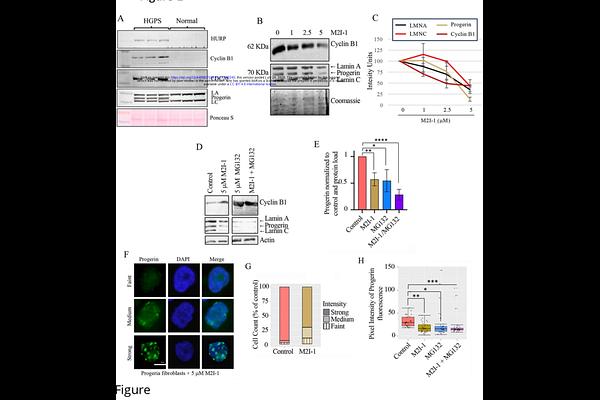
AbstractThe premature aging disease Hutchinson-Gilford Progeria Syndrome (HGPS) results from the accumulation of progerin, a cytotoxic protein generated from a point mutation in the Lamin A/C gene, in the nuclear lamina. Upon the proper stimulation, cells degrade progerin, reversing cellular HGPS phenotypes; however, there is still a gap in our knowledge concerning which pathways are mediating progerin degradation. Previous data has demonstrated that the Anaphase Promoting Complex (APC), a multi-subunit ubiquitin ligase, tagets proteins for degradation, and that a decrease in APC function is linked with cellular aging. To determine if the APC is linked to HGPS disease phenotypes, we performed a meta-analysis of RNA-seq data from skin samples isolated from HGPS patients and identified dysregulation of several genes encoding subunits and substrates of the APC. Stimulation of APC activity decreased progerin protein levels and significantly decreased the number of cells with nuclear blebs. Proximity ligation assays (PLA) demonstrated that APC structure is compromised in HGPS cells and that APC stimulation increases proximity of the APC with progerin. Coimmunoprecipitation revealed that the APC co-activator, CDC20, physically interacted with nuclear lamina proteins. We further demonstrate that APC-mediated progerin degradation occurs through autophagy. Inhibition of the 26S proteasome enhanced progerin degradation, providing additional support for APC mediated-progerin degradation occurring independent of the proteasome. As such, we propose a previously unidentified interaction and mechanism by which cells remove progerin. This finding has impact on potential therapeutic strategies for HGPS, as well as providing further insight into linking the APC with both normal and premature aging.