Functional characterization of a cytosolic malic enzyme crucial for pyridine nucleotide homeostasis, redox balance, and virulence in Leishmania major

Functional characterization of a cytosolic malic enzyme crucial for pyridine nucleotide homeostasis, redox balance, and virulence in Leishmania major
Pal, A.; Modak, D.; Khan, F.; Mondal, D. K.; Gourinath, S.; Datta, R.
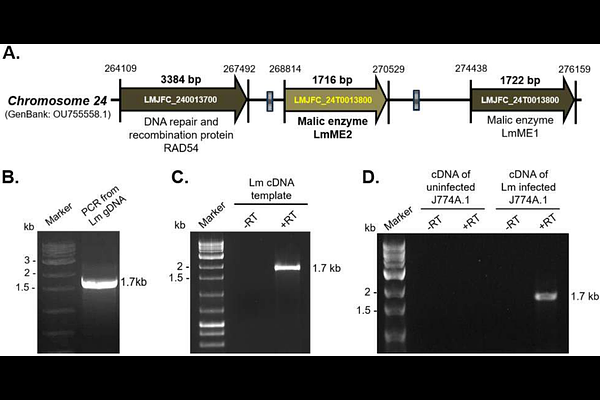
AbstractMalic enzymes (MEs) occupy a central node in metabolism, by catalyzing the reversible oxidative decarboxylation of malate to pyruvate, thereby contributing to maintenance of NADPH homeostasis. Leishmania spp. are known to encode two ME isoforms, however only one from Leishmania major has been functionally characterised till date to be a mitochondrial enzyme, playing critical role in gluconeogenesis. Here, we cloned and functionally characterized the second isoform, LmME2. Colocalization and subcellular fractionation analysis established that LmME2 localizes to the cytosol. Kinetic analyses of purified LmME2 revealed comparable rates of malate decarboxylation and pyruvate carboxylation, however, pyruvate carboxylation predominated in parasite cell lysates, indicating that the directionality of the reaction is metabolically regulated in cellular environment. Consistent with this, we identified oxaloacetate, ATP and fumarate as allosteric modulators of LmME2 activity. To dissect its physiological role, we generated CRISPR-Cas9-mediated LmME2 knockout parasites (LmME2-/-). Interestingly, LmME2 deletion did not alter NADPH levels but depleted both NADP+ and NAD+ pools, with reduction in NAD+ being more pronounced. This disruption of pyridine nucleotide homeostasis resulted in elevated intracellular ROS levels. Furthermore, inhibition of the pentose phosphate pathway, the alternative cytosolic source of NADPH, severely impaired the growth of LmME2-/- strain, highlighting the role of LmME2 in maintaining parasite fitness. These metabolic defects translated into markedly diminished intracellular survival of LmME2-/- parasites and its attenuated virulence in mice. Collectively, our findings identify LmME2 as the first functionally characterized cytosolic malic enzyme in Leishmania and establish it as a redox-associated virulence factor. These results further highlight LmME2 as a promising antileishmanial drug target.