Anopheles azevedoi (Ribeiro, 1969) in Angola: New geographical records, molecular characterization, and insecticide susceptibility profile of a commonly misidentified species

Anopheles azevedoi (Ribeiro, 1969) in Angola: New geographical records, molecular characterization, and insecticide susceptibility profile of a commonly misidentified species
Alves, G.; Marques, C.; Marcet, P.; Chipepa, V.; Fedorova, A.; Sutcliffe, A.; do Rosario, J.; Calles, D.; Troco, A. D.; Chissanga, M. S.; Espalhado, F.; Nobrega, T.; Sousa, C.; Pinto, J.; Cani, P. J.; Martins, J. F.; Yoshimizu, M.; Torres Gutierrez, C.
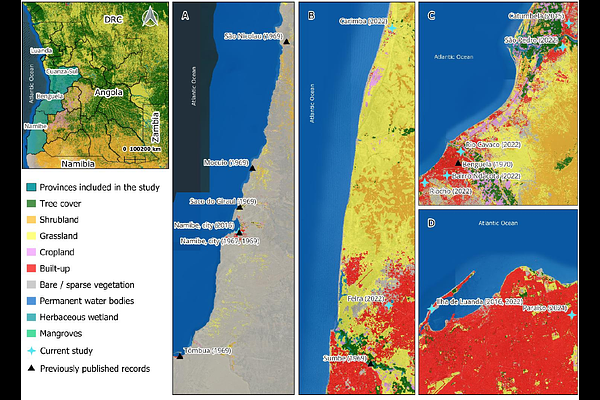
AbstractBACKGROUND Angola ranks among the five countries with the highest malaria burden globally. The Ministry of Health in Angola has consistently partnered with international donors to sustain entomological surveillance and vector control strategies in a context of high malaria burden. METHODS Vector surveillance was carried out in Luanda, Benguela, Namibe and Cuanza Sul provinces from 2016-2022. Collected adult mosquitoes were tested to assess the presence of Plasmodium parasites and determine blood sources. Larvae collections provided live material to test insecticide susceptibility in local Anopheles populations. Taxonomic determination of mosquitoes was based on external morphology and confirmed with molecular assays. The presence of Anopheles azevedoi was confirmed through morphology and genetic sequences, and errors in the original species determination were detected, discussed and corrected. OBJECTIVES The study aimed to update the geographical range of Anopheles azevedoi in Angola and monitor the susceptibility of this species to public health insecticides. FINDINGS and MAIN CONCLUSIONS We report on populations of Anopheles azevedoi occurring along the western coast of Angola, a highly abundant species with anthropophilic behavior in urban areas. Anopheles azevedoi is widely resistant to pyrethroids and DDT but fully susceptible to chlorfenapyr. We contribute with COI and ITS-2 barcoding sequences for future species identification and explain the reasons for which this species has been for long misidentified in Angola.