Myeloid STING restrains cardiac remodeling by suppressing macrophage amyloid precursor protein

Myeloid STING restrains cardiac remodeling by suppressing macrophage amyloid precursor protein
Natarajan, N.; Johny, E.; Sriram, V.; Hara, M.; Antwi, P. A.; Ohayon-Steckel, L.; Dutta, A.; Raj, A.; Dutta, P.
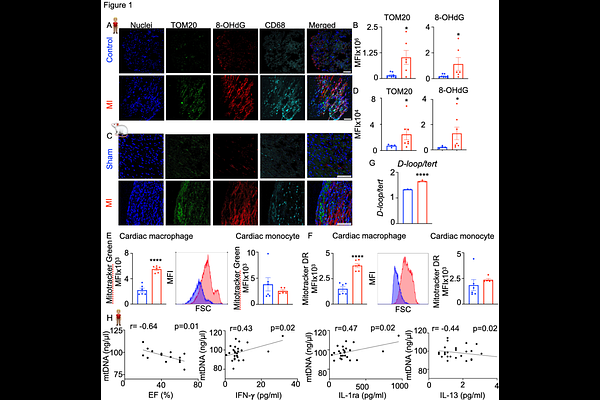
AbstractMitochondrial DNA (mtDNA) released into the cytosol activates innate immune signaling and promotes inflammation, yet its role in macrophages following sterile tissue injury remains poorly understood. Here, we show that cardiac macrophages from both patients and mice with myocardial infarction (MI) exhibit increased mitochondrial biogenesis, mitochondrial content, membrane potential, and expression of mitochondrial nucleases that facilitate mtDNA release. Consistently, macrophage-specific silencing of genes regulating mitochondrial biogenesis or mtDNA processing attenuated adverse cardiac remodeling after MI. Unexpectedly, despite the role of mtDNA in activating the cGAS-STING pathway, myeloid deletion or macrophage-specific silencing of Sting or cGas exacerbated ventricular dilation, fibrosis, and contractile dysfunction following MI. Single-cell transcriptomic and cell communication analyses identified amyloid precursor protein (APP) as a key downstream effector of STING in cardiac macrophages. Macrophage-specific in vivo App silencing rescued the detrimental effects of myeloid Sting deficiency, establishing APP as a critical mediator of adverse remodeling. Mechanistically, STING interacted with the transcriptional repressor MZF1, promoted its nuclear localization, facilitated its binding to the App promoter, and suppressed App transcription to restrain adverse cardiac remodeling. Together, our findings uncover an unexpected cardioprotective function of myeloid STING and identify the STING-MZF1-APP axis as a previously unrecognized mechanism governing cardiac repair after myocardial infarction.