INTS6 loss of function disrupts transcriptional regulation in mild intellectual disability

INTS6 loss of function disrupts transcriptional regulation in mild intellectual disability
Jalkanen, N.; Trontti, K.; Norppa, A. J.; Rahikkala, E.; Lilis, P.; Puigdevall, P.; Ivancic, L.; Niemimaa, N.; Vuokila, V.; Assaf, N.; Urpa, L.; Kurki, M.; Hämäläinen, E.; Kuismin, O.; Palotie, A.; Frilander, M. J.; Kilpinen, H.; Pietiläinen, O.
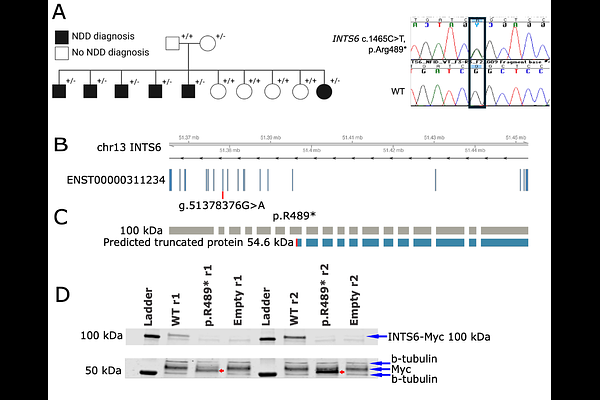
AbstractPathogenic variants in genes involved in transcriptional regulation and RNA processing have emerged as points of functional convergence in neurodevelopmental disorders (NDDs), but their specific disease mechanisms remain unknown. By screening 1,562 Finnish extended families from the Northern Finland Intellectual Disability cohort affected by cognitive impairment, we discovered a family with six affected members carrying a heterozygous loss-of-function variant in INTS6. INTS6 is a conserved member of the phosphatase module of the Integrator complex, which regulates RNA polymerase II activity, with a reported role in the pathogenesis of NDDs. To determine the variant's transcriptomic effects, we performed RNA-sequencing of induced pluripotent stem cells (iPSCs) and iPSC-derived neuronal cells from cases and controls, revealing transcriptome-wide splicing defects, with increased intron retention observed in genes involved in translation, cell cycle and RNA processing in variant carriers. CRISPR-Cas9 knock-in iPSCs confirmed that the variant was associated with downregulation of transcription factors and developmental processes in early neuron differentiation. In addition, downregulated genes in variant carrier neurons were enriched for synaptic genes, suggesting effects on neuronal development. These findings highlight the critical role of INTS6 in transcriptional regulation of human neurodevelopment and reinforce its association with NDDs.