Integrated phenomic and transcriptomic analyses unveil superior drought plasticity of North African durum wheat landraces

Integrated phenomic and transcriptomic analyses unveil superior drought plasticity of North African durum wheat landraces
Djemal, R.; Trabelsi, R.; Ghazala, I.; Ebel, C.; Messerer, M.; Boukouba, R.; Gdoura-Ben Amor, M.; Charfeddine, S.; Elleuch, A.; Gdoura, R.; Mayer, K. F. X.; Winkler, J. W. B.; Schnitzler, J.-P.; Hanin, M.
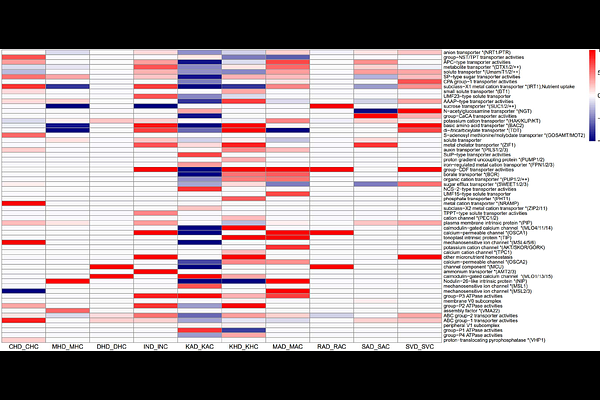
AbstractDrought is a major constraint on the productivity of durum wheat across Mediterranean and North African regions. To elucidate the mechanisms underlying drought resilience, we employed a combination of scenario-controlled phenomics and flag leaf transcriptomics across ten durum wheat genotypes. These included the Tunisian landraces Chili and Mahmoudi, seven breeding lines, and the reference cultivar Svevo. The plants were grown to maturity under well-watered or long-term drought conditions in pots and rhizotrons, enabling a comprehensive assessment of growth, yield components, root architecture, physiological traits, and reaction norm plasticity. Drought markedly reduced performance, yet Chili and Mahmoudi consistently maintained superior biomass, grain number and intrinsic water use efficiency (iWUE). This was supported by balanced C/N allocation, strong osmotic adjustment, and the ability to sustain robust root systems under stress, albeit through partly divergent physiological strategies. Transcriptomic profiling revealed highly genotype specific responses, with drought tolerance unrelated to the number of differentially expressed genes. Instead, the landraces displayed distinct regulatory programs involving mainly photosynthesis protection, ABA-related transporters, osmotic adjustment pathways, and stress-responsive transcription factors. These mechanistic insights identify actionable physiological and molecular determinants of drought plasticity and provide high value targets for accelerating the breeding of climate resilient durum wheat.