Loss of PTPRK in hepatocytes reduces steatosis and carcinogen-induced tumour development in obesity

Loss of PTPRK in hepatocytes reduces steatosis and carcinogen-induced tumour development in obesity
Li, A.; St-Pierre-Wijckmans, W.; Hovhannisyan, G. G.; Lai, T.; Buss, C. E.; Arroba, E.; Dahili, R.; Hosseinzadeh, L.; Singh, S. P.; Yu, L.; Oxley, D.; Sharpe, H.; Gilglioni, E. H.; Gurzov, E. N.
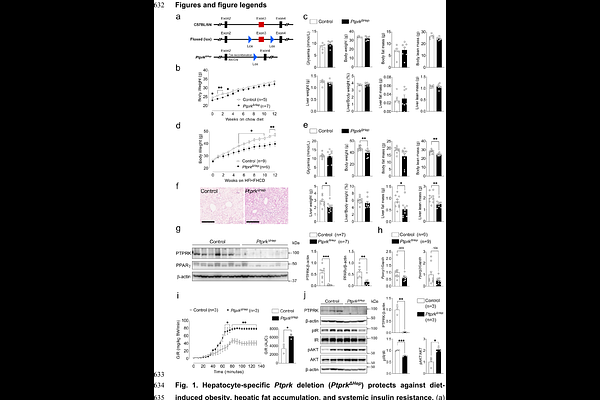
AbstractProtein tyrosine phosphatases are crucial regulators of metabolism with specific roles in different tissues. To investigate hepatocyte-specific function of protein tyrosine phosphatase receptor type K (PTPRK), we generated mice carrying floxed Ptprk alleles and crossed them with Alb-Cre mice (Ptprk{Delta}Hep mice). Under chow feeding, Ptprk{Delta}Hep mice were largely comparable to littermate controls. In contrast, Ptprk{Delta}Hep mice fed a high-fat, high-fructose, high-cholesterol diet exhibited reduced steatosis, lower hepatic PPAR{gamma}, and blunted hepatocyte hypertrophy, accompanied by improved systemic insulin sensitivity, as assessed by hyperinsulinemic-euglycemic clamps. We identified PTPRK-interacting proteins enriched for metabolic functions associated with glycolysis and lipid biosynthesis using pull downs from primary hepatocyte lysates. In line with these findings, Ptprk{Delta}Hep mice developed fewer tumours than controls in an obesity and carcinogen-induced hepatocellular carcinoma (HCC) model. Our data show that under nutrient excess PTPRK is functionally engaged in hepatocytes to support PPAR{gamma}-linked steatotic growth, insulin resistance, and tumour initiation, highlighting PTPRK as a potential therapeutic target in MASLD-associated HCC.