The Energetic Cost of Adrenergic Signaling in Primary Human Fibroblasts

The Energetic Cost of Adrenergic Signaling in Primary Human Fibroblasts
Smith, J. L. M.; Sturm, G.; Picard, M.
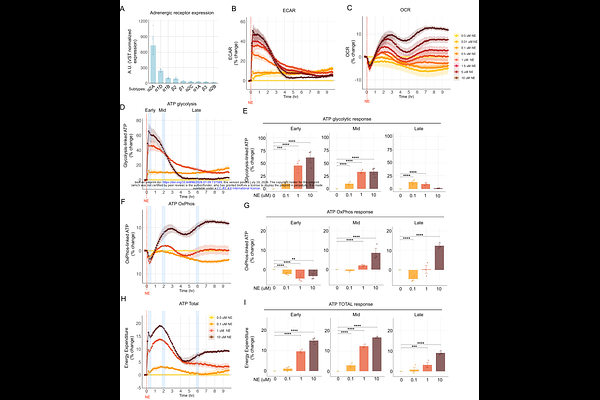
AbstractStress involves the activation of cellular, physiological, and emotional processes that cost energy--nothing is free in biology. In mammals, the stress response involves hormone release, including norepinephrine (NE), which increases energy expenditure. To quantify the energetic cost of NE signaling in a simple cellular system, we interrogated the dose (0-10 M NE) and time-dependent (up to 10 hours) effects of adrenergic signaling in primary human fibroblasts. Oxygen consumption rates (OCR, reflecting ATP generated by mitochondria) and extracellular acidification rate (ECAR, reflecting ATP generated by glycolysis) were measured continuously using extracellular flux analysis, allowing us to estimate the ATP turnover rates, and thus cellular energy expenditure. Within the first 18 minutes (early phase), glycolysis increases up to 47% whereas respiration decreased 2-5%. Both parameters normalized within 1-2 hours for low NE concentrations. This was followed by an increase in oxidative phosphorylation (OxPhos), peaking around 9-12% by 2-6 hours (mid or late-phase). These minutes-to-hours data reveal the temporal dynamics whereby NE increases cellular energy expenditure in fibroblasts. Blocking OxPhos with oligomycin or piericidin A abolished OxPhos changes post-NE addition while conserving the glycolytic response. Withdrawal of glucose from the media significantly dampened the absolute rise in ECAR in response to NE, and instead increased OxPhos, revealing the metabolic flexibility in fibroblasts. Finally, cells with genetic defects impairing OxPhos exhibited a 50% blunted NE-driven metabolic response, consistent with the existence of an energy constraint in mitochondrial diseases. In summary, we have resolved the dynamics and flexible bioenergetic recalibrations associated with NE-driven hypermetabolism in primary human fibroblasts. Mapping the nature and magnitude of these recalibrations in humans would advance our understanding of the potential energetic forces underlying the damage to health by chronic stress.