Leaf age modulates physiological and metabolic responses to contrasting nitrogen forms in Chinese fir (Cunninghamia lanceolata (Lamb.) Hook)

Leaf age modulates physiological and metabolic responses to contrasting nitrogen forms in Chinese fir (Cunninghamia lanceolata (Lamb.) Hook)
Fu, W.; Zhang, Y.; Yu, W.; Zhang, Z.; Yuan, S.; Chen, G.; Zeng, J.
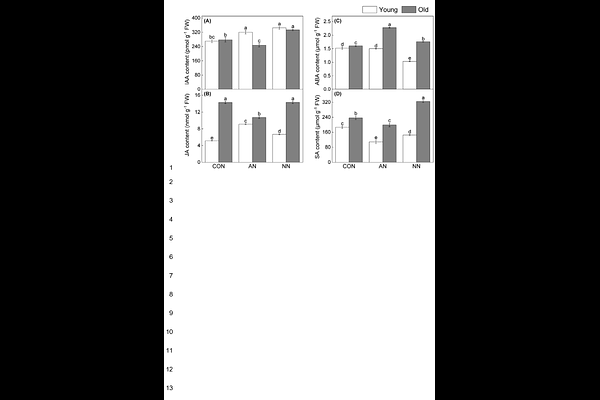
AbstractAtmospheric nitrogen (N) deposition is increasingly affecting global ecosystems, with nitrate contributing a growing proportion alongside ammonium. However, the interaction between N forms and leaf developmental stage in shaping physiological and metabolic strategies in Chinese fir remains poorly understood. In this study, a field experiment was conducted to explore the physiological and metabolic responses of young and old leaves to ammonium and nitrate N addition. Our findings showed that N addition enhanced photosynthetic performance in young leaves, with a stronger effect from nitrate. In contrast, old leaves exhibited limited photosynthetic response but accumulated higher non-structural carbohydrates and showed elevated N assimilation enzyme activities, particularly under nitrate addition. Phytohormone profiles varied between leaf ages, with young leaves having higher auxin levels while old leaves exhibiting increased abscisic and salicylic acid contents under N addition. Additionally, N addition induced differential reprogramming of amino acid metabolism, with age-dependent accumulation patterns. Metabolomic analysis identified key amino acids involved in coordinating carbon-nitrogen metabolism. These results highlighted the complementary metabolic strategies by young and old leaves of Chinese fir under contrasting N forms addition and emphasized the importance of considering both N form and leaf age in optimizing N management for sustainable plantation practices.