A preclinical resistance framework discovers the virulence risks of antibiotics in development

A preclinical resistance framework discovers the virulence risks of antibiotics in development
Szili, P.; Czikkely, M. S.; Farkas, Z.; Daruka, L.; Toldi, B.; Kurko, E.; Vonyo, A. Z.; Csernyak, M.; Kaman, R.; Maharramov, E.; Daraba, A.; Benedek, B.; Imre, G.; Lantos, I. I.; Meszaros, L.; Somogyi, A.; Nagy, D. E.; Nagy, Z. F.; Grezal, G.; Ari, E.; Kada, N.; Papp, B.; Csenki-Bakos, Z.; Kaszab, E.; Kriszt, B.; Szabo, I.; Balogh, G.; Peter, M.; Gombos, I.; Pilbat, A.-M.; Torok, Z.; Varga, Z.; Czimmerer, Z.; Csorgo, B.; Adamecz, D.; Papp, C. G.; Szilovics, Z.; Veres, E.; Gacser, A.; Madacsy, T.; Maleth, J.; Ayaydin, F.; Farkas, A.; Tengolics, R.; Kintses, B.; Varga, V.; Haracska, L.; Juhasz,
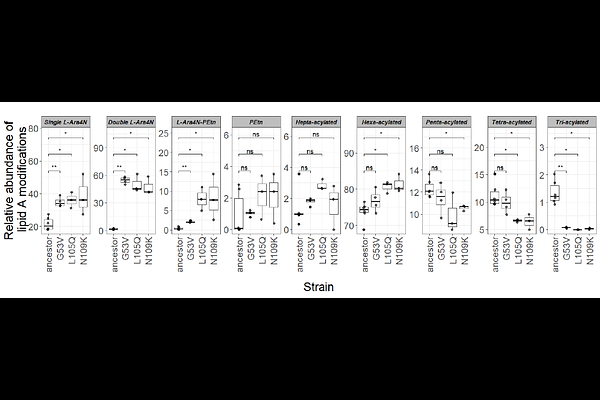
AbstractSeveral new antibiotics target multidrug-resistant pathogens, yet resistance is still evaluated mainly by drug-susceptibility, leaving consequences for bacterial pathogenicity poorly understood. Here, we develop a framework integrating resistance evolution, genomic surveillance and host-pathogen phenotyping to classify antibiotics by resistance potential and pathogenic consequences. Applying this framework to Klebsiella pneumoniae identified functionally distinct antibiotic candidates associated with elevated virulence risk. Resistance evolution rapidly increased virulence through clinically-relevant mutations, without direct selection for pathogenicity. Despite distinct genetic routes, resistance converged on cell-envelope rewiring. A single resistance mutation increased epithelial adhesion, intracellular colonization, macrophage immune-evasion, and tissue persistence in murine infection models, transforming K. pneumoniae into a more invasive and cytotoxic pathogen. Risk-profile analysis revealed partial decoupling of resistance and pathogenicity, with some low-resistance antibiotics yielding highly-virulent populations. These findings establish resistance-driven virulence as an underappreciated translational hazard and call for incorporating host-pathogen interactions into resistance surveillance and preclinical antibiotic development.