Levosimendan inhibits HIV-1 infection in myeloid cells in the RIOK1-dependent manner

Levosimendan inhibits HIV-1 infection in myeloid cells in the RIOK1-dependent manner
He, J.; Ma, J.; Park, Y.; Zhou, D.; Wang, X.; Fiches, G. N.; Shanaka, K. A.; Lepcha, T. T.; Liu, Y.; Eleya, S.; Santoso, N. G.; Ho, W.-Z.; Zhu, J.
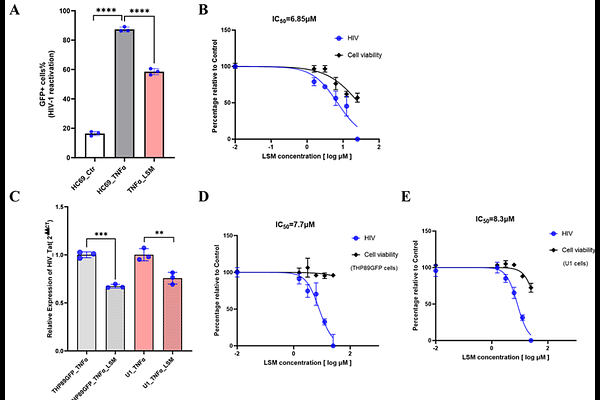
AbstractDespite of the highly potent antiretroviral therapies, HIV-1 establishes persistent infection and causes chronic inflammation in AIDS patients. Beyond CD4+ T cells, HIV-1 infects myeloid cells, including circulating monocytes and tissue-resident macrophages, and integrates with host genomes to form stable viral reservoirs. To achieve a functional HIV cure, latency-promoting agents (LPAs) have been developed for the block-and-lock strategy to reinforce deep HIV-1 latency and permanently silence proviruses. However, most LPAs have been tested mainly in CD4+ T cells, and their efficacy in myeloid cells remains unclear. In this study, we reported that levosimendan (LSM), a drug approved for clinic use to treat heart failures, is able to inhibit HIV lytic infection and reactivation in myeloid cells. LSM blocked viral lytic reactivation in HIV-1 latently infected monocytic cells (TH89GFP, U1) and microglial cells (HC69). LSM also inhibited HIV infection in human induced pluripotent stem cell (iPSC) derived microglia (iMG), primary human resident liver macrophages (Kupffer cells) as well as human monocyte-derived macrophages (MDMs). Furthermore, we demonstrated that overexpression of a predicted drug target of LSM, the conserved serine/threonine kinase RIOK1 (RIO kinase 1), overcomes the anti-HIV effect of LSM. Overall, our studies concluded that LSM is a promising LPA to inhibit HIV-1 infection in myeloid cells in the RIOK1-dependent manner.